





Precision Instrument Industry
Application of JONSN Precision Gear Pumps in Precision Instrumentation
Precision Fluid Delivery Solutions for HPLC, ICP, TOC Analyzers and Online Water Quality Monitors
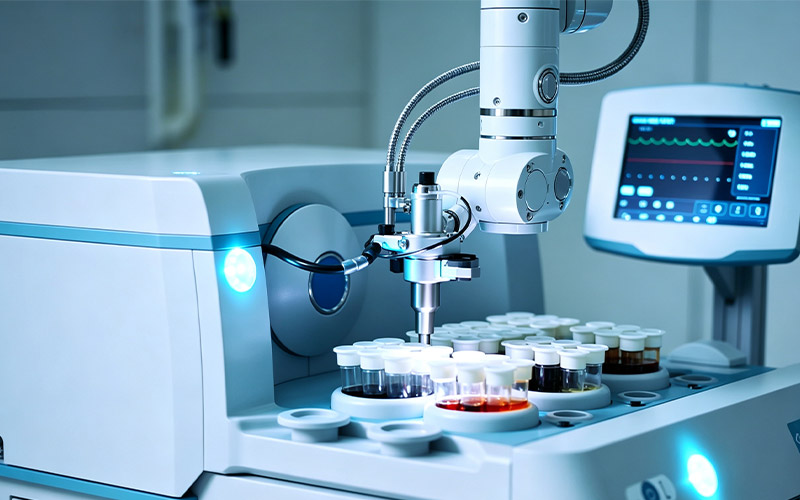
I.Core Requirements for Pumps in Precision Instrumentation: Flow Accuracy and Pressure Stability
Precision analytical instruments including High-Performance Liquid Chromatography (HPLC), Inductively Coupled Plasma Spectrometry (ICP), Total Organic Carbon (TOC) Analyzers and online water quality monitors impose extremely stringent requirements on fluid delivery systems. Such instruments demand high-precision, pulse-free and consistent medium transfer across micro to medium flow ranges to guarantee reliable and reproducible analytical results. Any deviations such as flow fluctuations, pressure pulsations or leakage may trigger baseline drift, peak distortion or quantitative errors, which directly compromise detection accuracy and data credibility.
Performance Parameter Requirements for Pumps by Type of Precision Instrument
Divergent analytical principles and workflows of different precision instruments lead to varied priorities for pump specifications, including flow range, pressure rating, pulse suppression and medium coMPatibility. A detailed breakdown of four typical application scenarios (HPLC, ICP, TOC and online water quality analyzers) is provided below.
| Parameter | HPLC | ICP-OES / ICP-MS | TOC Analyzer | Online Water Quality |
|---|---|---|---|---|
| Flow Range | 0.1–10 mL/min (analytical); 0.5–100 mL/min (preparative) | 0.5–3 mL/min (micro sample introduction) | 0.1–5 mL/min (micro delivery) | 0.5–20 mL/min (varies by reagent & sample channels) |
| Flow Accuracy | RSD ≤ 0.5%; high-end systems require RSD ≤ 0.1% | RSD ≤ 1% to stabilize plasma signals | RSD ≤ 0.5% for complete oxidation & repeatable measurement | RSD ≤ 1% to guarantee consistent colorimetric reactions |
| Pressure Requirement | 5–40 MPa (50–400 bar) conventional; 60–120 MPa for UHPLC | 0.1–0.5 MPa low pressure, sufficient to overcome nebulizer backpressure | 0.1–1 MPa to counteract resistance from combustion tubes & reactors | 0.1–2 MPa to overcome resistance from filters & pipelines |
| Pulse Control | Pulse rate ≤ 1%, ideally ≤ 0.2% | Ultra-low pulsation required to maintain nebulization efficiency | Near pulse-free to stabilize carrier gas / sample mixing ratio | Pulse-free for steady multi-channel reagent dosing |
| Medium CoMPatibility | Water, organic solvents (methanol, acetonitrile), acid/base buffers | Resistant to strong acids (HNO₃, HCl, HF) and complex matrix solutions | Pure water, acidified water samples, oxidants (e.g., persulfate) | Water samples, reagents, standard solutions with strong corrosion resistance |
The pump acts as the core driving component for mobile phase delivery in HPLC, whose performance directly determines the repeatability of chromatographic separation and quantitative accuracy. Peristaltic pumps have traditionally been deployed for sample introduction in ICP systems, yet they suffer from short tube service life, severe flow drift and prominent pulsation — precision gear pumps emerge as a superior alternative. TOC analyzers operate continuously online for extended periods, placing high demands on long-term pump stability and maintenance-free performance. Peristaltic pumps and diaphragm pumps are commonly used in online water quality analyzers, yet they feature frequent tube replacement, severe pulsation and progressive flow attenuation.
II.Common Pump Failures in Precision Instrumentation & Corresponding Solutions
Improper pump selection or insufficient performance often undermines the overall functionality of precision instruments. The table below systematically summarizes typical pump malfunctions encountered in precision instrumentation, inherent limitations of conventional pumps, and targeted solutions & advantages delivered by JONSN precision gear pumps.
Reciprocating/diaphragm pumps feature pulse rate ≥ 2–5%; peristaltic pumps generate obvious pulsation aggravated by tube aging
High-conformity gear profile design enables pulse-free delivery with pulse rate ≤ 0.2%; stepper/servo motor matching delivers consistent flow curves verified over 3-hour continuous testing
Peristaltic pump flow fluctuates due to tube compression and rebound with RSD reaching 2–5%; diaphragm pumps exhibit inferior linearity
Positive displacement volumetric design delivers highly linear flow–speed correlation with accuracy within 0.2%; closed-loop control systems enable precise metering
Reciprocating plunger pumps wear dynamic seals prone to leakage; peristaltic pump tubes risk rupture
Magnetically coupled sealless structure with static O-ring isolation fully separates medium from external environment to achieve zero leakage
Metal pump bodies fail to withstand strong acids and alkalis; peristaltic pump tubes are limited by material options
316L stainless steel / Hastelloy C-276 pump heads; PEEK + zirconia ceramic gear shafts and bearings resist nearly all corrosive media
Peristaltic pump tubes only last tens to hundreds of hours; diaphragm pump diaphragms require periodic replacement
PEEK nano-ceramic composite bearings and zirconia shafts deliver 3× longer service life than standard gear pumps; consistent linearity maintained after 2 hours of dry running under extreme conditions
Centrifugal pumps have limited inlet vacuum; peristaltic pump suction declines with tube aging
Maximum inlet vacuum of -0.095 MPa enables stable suction of low-level and high-viscosity media
Peristaltic pumps max out at 2 bar; standard gear pumps limited to 10 bar
Standard pump body withstands 4 MPa (40 bar), with customized variants reaching 6–10 MPa (60–100 bar) to accommodate medium-to-high pressure delivery
Inconsistent performance across peristaltic pump channels; uneven tube aging accumulates flow deviations
Independent closed-loop control for individual gear pumps delivers tunable, long-term consistent flow per channel, eliminating deviations caused by tube degradation
Peristaltic pump flow drifts persistently as tube elasticity fades; diaphragm pumps suffer from diaphragm fatigue
Magnetic gear pumps eliminate flexible consumables (tubes/diaphragms) to maintain stable flow without drift; ideal for 7×24-hour continuous operation
III.Operational Workflow of Pumps in Precision Instruments
Pumps serve as more than mere liquid transfer components — they constitute critical nodes throughout the entire analytical workflow. Detailed functional positioning and workflows for pumps across the four instrument categories are elaborated below.
The pump (fluid delivery system) acts as the core power source driving mobile phase circulation across the entire HPLC system. In HPLC workflows, pump performance dictates mobile phase flow stability and pressure uniformity, which in turn govern retention time repeatability (RSD) and quantitative precision. Featuring pulse-free operation and 0.2% flow accuracy, JONSN precision gear pumps effectively replace traditional reciprocating plunger pumps for low-to-medium pressure analytical and semi-preparative HPLC applications.
The ICP-OES/ICP-MS sample introduction system relies on pumps to deliver sample solutions steadily to nebulizers. In ICP sample introduction systems, pump flow stability directly determines nebulization efficiency and plasma signal consistency. JONSN precision gear pumps feature magnetically coupled sealless construction with Hastelloy C-276 pump heads resistant to strong acids, enabling truly maintenance-free long-term operation.
TOC analyzers measure organic carbon concentrations in water via oxidation-detection sequences, with pumps undertaking precise delivery of samples and reagents. TOC analyzers demand precise proportional delivery of acidified water and oxidants alongside exceptional long-term operational stability. JONSN gear pumps deliver highly linear flow to maintain accurate sample-reagent mixing ratios and support 7×24-hour continuous online monitoring without maintenance.
Online water quality analyzers primarily adopt multi-channel colorimetry or electrode detection, requiring pumps to synchronously deliver samples and multiple reagents. Online water quality analyzers operate continuously in environments with corrosive reagents and complex water matrices, imposing rigorous requirements on pump corrosion resistance, multi-channel consistency and maintenance-free long-term operation. The tube-free design drastically reduces on-site maintenance frequency and labor costs for online monitoring equipment.
IV.Core Advantages of JONSN Precision Gear Pumps
Years of R&D optimization and deployment across tens of thousands of installations have equipped JONSN precision micro magnetic gear pumps with distinct competitive strengths for precision instrumentation applications.

V.Recommended Model Selection of JONSN Precision Gear Pumps for Precision Instrumentation
Below is a targeted selection matrix of JONSN product series aligned with the unique flow, pressure and medium requirements of the four categories of precision instruments.
| Application Field | Recommended Series | Standard Models | Flow Range | Operating Differential Pressure | Pump Head Material | Suggested Motor |
|---|---|---|---|---|---|---|
| HPLC (Analytical & Semi-Preparative) | MPG | MPG004 / MPG008 | 1–280 mL/min | 2–5 bar | 316L Stainless Steel | 42-frame stepper or 40-frame servo motor |
| ICP-OES / ICP-MS | MRA | MRA5/13 / MRA7/13 | 0.15–1.1 mL/min | 0.5–25 bar | Hastelloy C-276 | Stepper motor or 24V brushless DC |
| TOC Analyzers | MPG / MRA | MPG004 / MRA5/13 | 1–570 mL/min | 2–25 bar | 316L SS / Hastelloy C-276 | Stepper motor with closed-loop flow control |
| Online Water Quality Analyzers | MRA / MRB | MRA7/13 / MRB Series | 0.3–4800 mL/min | 0.5–25 bar | Hastelloy C-276 | Brushless DC or independent multi-pump drive |
Detailed Selection Guidance & Configuration Recommendations
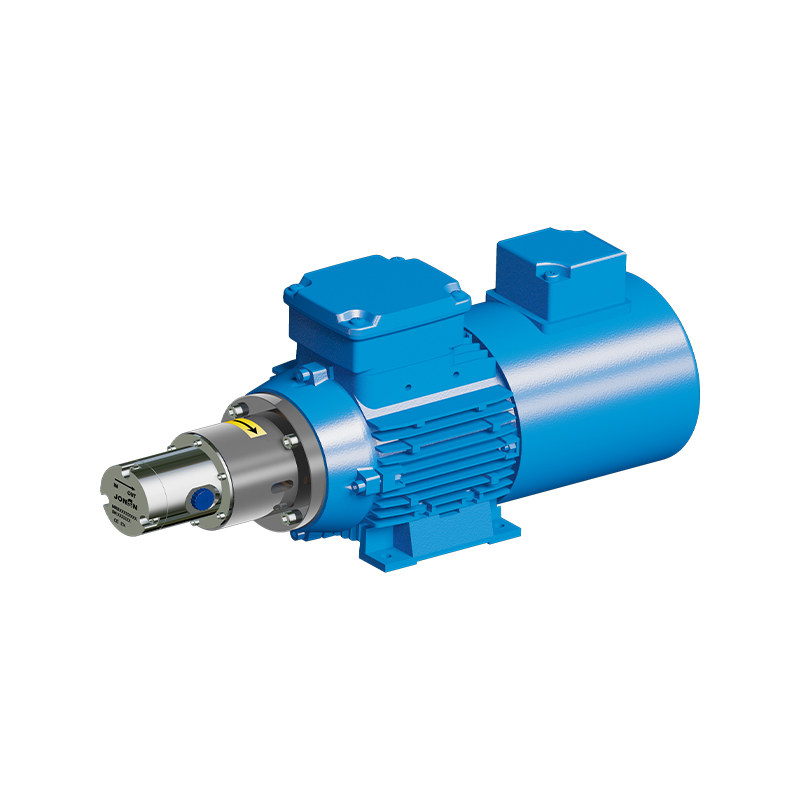
The MPG series is recommended for low-to-medium pressure fluid delivery in analytical and semi-preparative HPLC systems.
MPG004 features a displacement of 40 μL/rev, delivering ultra-precise micro flow below 1 mL/min at low rotational speeds with exceptional linearity.
MPG008 has a displacement of 80 μL/rev, covering 15–280 mL/min at a working differential pressure of 5 bar, suitable for semi-preparative workflows.
42-frame stepper motors or 40-frame servo motors paired with JONSN closed-loop flow control systems enable precise flow programming for gradient elution.
For UHPLC operating above 40 MPa, coMPatibility assessment of the DP series precision metering gear pumps is required.
The MRA series is the optimal choice for ICP sample introduction systems.
MRA5/13 delivers approximately 2.5 mL/min at 750 RPM, perfectly covering the standard ICP sample flow range of 0.5–3 mL/min.
Hastelloy C-276 pump heads to withstand nitric, hydrochloric and hydrofluoric acids.
24V stepper or brushless DC motors for precise rotational speed and flow regulation.
Magnetically coupled sealless construction prevents internal instrument corrosion from sample vapor leakage.
Replacing conventional peristaltic pumps with JONSN gear pumps eliminates tube replacement cycles (tens to hundreds of operating hours) and delivers truly maintenance-free sample introduction.
Separate MPG004 and MRA5/13 pumps are recommended for TOC sample and reagent channels respectively.
MPG004 handles micro sample extraction (1–135 mL/min).
MRA5/13 delivers precise proportional dosing of oxidants.
Stepper motors integrated with closed-loop flow control guarantee accurate sample-reagent mixing ratios.
Pump head material selection is medium-dependent: 316L stainless steel for pure water circuits, Hastelloy C-276 for acidified water and oxidant delivery circuits.
A combined MRA (low-flow reagent channels) and MRB (medium-flow sample channels) configuration is recommended.
Each channel is driven independently by stepper or servo motors to eliminate disproportionate flow across multiple circuits.
All pump heads adopt Hastelloy C-276 for universal resistance to corrosive analytical reagents.
24V brushless DC motors are recommended to support round-the-clock continuous operation.
The tube-free design maintains drift-free flow over 7×24-hour operation and drastically reduces on-site maintenance labor and frequency.
VI.Conclusion
Precision analytical instruments impose increasingly stringent demands on fluid delivery systems: minimal pulsation, superior accuracy, extended service life and universal medium coMPatibility.
Conventional peristaltic and diaphragm metering pumps are inherently limited by poor pulsation suppression, unstable long-term performance and inadequate corrosion resistance, emerging as critical bottlenecks hindering overall instrument performance improvement.
JONSN precision micro magnetic gear pumps deliver systematic upgrade solutions for HPLC, ICP, TOC analyzers and online water quality monitors, featuring pulse-free linear delivery, 0.2% flow accuracy, magnetically coupled zero-leakage construction and all-round corrosion resistance via Hastelloy, PEEK and ceramic components, alongside a 3× extended service life.
As precision instrument manufacturers pursue higher detection accuracy and automated low-maintenance operation, JONSN precision gear pumps provide a pivotal upgrade path for fluid delivery systems, shifting performance from "marginally functional" to "accurate and reliable". Drawing on tens of thousands of field deployments and systematic selection expertise, the JONSN engineering team provides full-spectrum technical support for OEM customers, ranging from selection evaluation to customized development, facilitating continuous performance breakthroughs for precision analytical instruments.
Frequently Asked Questions
How does JONSN microfluidic pumps eliminate baseline drift in high-precision chromatographic instruments?
Traditional reciprocating plunger pumps create periodic pressure transient pulses, causing laminar disturbance. JONSN utilizes a Magnetically driven leak-free static seal that delivers an absolute pulse-free constant delivery, ensuring perfect steady fluid column speed and keeping baseline noise strictly locked.
Can JONSN analytical instrumentation pumps ensure zero crosscontamination for sensitive bio-reagents?
Yes. Built with premium imported wear-resistant PEEK gears and 100% Zirconia structural ceramic shafts, JONSN pumps prevent any metal-to-metal dry friction residue. This static leak-free sealing mechanism safely avoids outer impurities and guarantees zero trace element contamination.
How does JONSN guarantee multi-order batch reproducibility for high-volume instrument OEM manufacturing?
Under our strict "One Item, One Code" tracking system, critical parts processed by Mazak centers are laser-etched. 100% of final tolerances are certified by German ZEISS CMM under 20±2°C, locking cross-batch precision and volumetric efficiency uniform within ±0.5% deviation variance.
Does JONSN accept mechanical spatial co-design for custom built-in desktop dialysis or analyzer modules?
Yes. For limited space configurations inside coMPact diagnostic blocks, JONSN provides integrated micro options (like MRA series), supporting flexible engineering co-design. Technical leaders can request our 2D blueprints and 3D STEP models to avoid any spatial interference.