





Ternary Precursor & Lithium Battery
Ternary Precursor Gear Pump | NCM/NCA Co-Precipitation Precision Feeding <±0.3%
Lithium-ion battery manufacturing is a highly continuous precision process industry. Any deviation in fluid control at each process will be amplified step by step, ultimately affecting cell capacity consistency, internal resistance dispersion and cycle life — covering five core stages from slurry preparation to separator coating.
Continuous Precision Industry
Lithium-ion battery manufacturing is a highly continuous precision process industry. Any deviation in fluid control at each process will be amplified step by step, ultimately affecting cell capacity consistency, internal resistance dispersion and cycle life.New Battery Systems
New structures and systems including 4680 large cylindrical cells, blade batteries, solid-state and semi-solid-state batteries impose stricter requirements on process precision.Five Processes · Three Lines
The five core processes—slurry preparation, coating, electrolyte filling, NMP recovery and separator coating—handle fluids from low-viscosity solvents to high-viscosity slupries. JONSN provides MPG, MRA/MRB and DP series to cover all procedures with a single supplier.Category Text
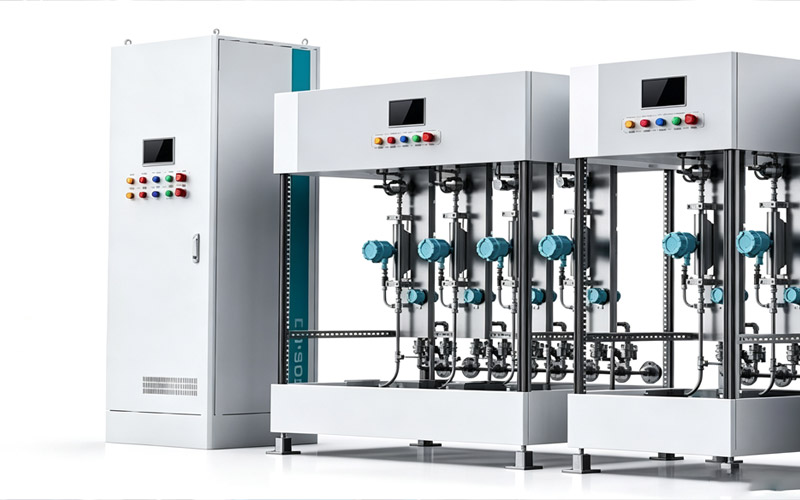
Built as an elite ternary precursor gear pump line, JONSN powers lithium battery slurry feed pump skids, glovebox electrolyte filling pump units, and NMP solvent recovery pump systems.Three Key Industry Pain Points in Battery Manufacturing
Feeding pulsation equals coating weight fluctuation equals capacity dispersion, electrolyte moisture sensitivity & corrosion risk, and NMP recovery solvent attack — each amplifying step-by-step into batch yield losses, formation gas anomalies, and excessive workshop VOC levels.
Five-Stage Integrated Battery Production Line
Five-stage engineering card layout — Stage 1 Slurry Transfer, Stage 2 Coating Supply, Stage 3 Electrolyte Filling, Stage 4 NMP Recovery, and Stage 5 Separator Coating — each mapped to recommended JONSN pump series with technical parameters and key adaptations.
Product Selection Guide for Battery Manufacturing
Engineering selection matrix covering every battery manufacturing process — cathode/anode slurry transfer, NMP coating feeding, electrolyte filling, NMP recovery circulation, separator coating, and slurry mixing solvent metering — with media / operating conditions, recommended JONSN series, displacement / flow, and key indicators.
| Manufacturing Process | Medium / Operating Conditions | Recommended Series | Displacement / Flow | Key Indicators |
|---|---|---|---|---|
| Cathode/Anode Slurry Transfer | NCM / LFP / Graphite slurry (2,000–15,000 MPa·s) | DP High-Viscosity Series | 0.2–100 cc/r | DLC coating, PEEK resistant |
| NMP Coating Feeding | Cathode / Anode slurry | MRA / MRB Series | 0.1–4.8 L/min | Pulsation-free, areal density Cpk > 1.67 |
| Electrolyte Filling | LiPF6 / carbonate electrolyte | MPG Micro Series | 40 μL/r (1–280 mL/min) | ±0.2%, fully sealed, zero moisture ingress |
| NMP Recovery Circulation | NMP recovery liquid (60–80°C) | MRB / MRC Series | 0.4–14 L/min | PEEK non-swelling, zero VOC |
| Separator Coating | Ceramic slurry / PVDF slurry | MPG / MRA Series | 1–2,000 mL/min | Pulsation-free, Cpk > 1.67 |
| Slurry Mixing Solvent Metering | NMP / Deionized water | MPG / MRA Series | 1–2,000 mL/min | ±0.5%, batch-to-batch formula consistency |
Five Core Customer Values in Lithium Manufacturing
Combined compliance and customer-value matrix — single supplier 5-stage coverage, pulsation-free consistency, zero moisture/leakage/metal contamination, seamless pilot-to-mass scale-up, and 20,000h maintenance-free operation — turning JONSN into the single-source supplier for gigawatt-scale lithium-ion battery production lines.
Single Supplier 5-Stage Coverage:
DP for high-viscosity slurry · MRA/MRB for coating flow · MPG for electrolyte · MRB/MRC for NMP · MPG/MRA for separator coating.Pulsation-Free Consistency:
Positive displacement gear pump design — the physical foundation for coating uniformity, electrolyte volume equality, and module-level capacity grading.Zero Moisture / Leakage / Metal:
Fully magnetic hermetic sealing for electrolyte filling in gloveboxes; fully enclosed systems for NMP recovery with zero VOC emissions; drip-free slurry transfer.20,000h Maintenance-Free:
Zirconia ceramic gear shaft wear resistance > 5× standard bushings — 2.5 years of continuous production without intervention, protecting line OEE.Ternary Precursor & Lithium Battery Technical FAQ
How does a JONSN ternary precursor gear pump maintain co-precipitation feeding accuracy within <±0.3%?
In NCM/NCA co-precipitation reactions, molar ratio deviations of nickel, cobalt, and manganese salts distort crystal morphology. A JONSN ternary precursor gear pump (MRA/MRB series in Hastelloy C-276 or PEEK) utilizes Mazak 5-axis carved high-coincidence gear sets driven by closed-loop servo motors. Delivering true positive displacement flow independent of reactor backpressure fluctuations, it locks continuous feeding flow accuracy within <±0.3%.
What engineering design allows JONSN lithium battery slurry feed pump units to achieve coating thickness Cpk > 1.67?
Flow pulsation during slurry feeding directly translates into coating weight variation, resulting in ±3%–5% cell capacity dispersion. JONSN lithium battery slurry feed pumps (MRA/MRB Series, 0.1–4.8 L/min) replace conventional reciprocating diaphragm pumps with continuous multi-tooth positive displacement meshing technology. By reducing flow fluctuation to below ±0.5%, they provide ultra-smooth and stable slurry delivery for slot-die coating processes, enabling consistent areal density control with Cpk ≥ 1.67.
Why is JONSN glovebox electrolyte filling pump technology superior for preventing moisture degradation?
Moisture exposure above the ppm level triggers LiPF6 hydro-decomposition into HF acid. A JONSN glovebox electrolyte filling pump (MPG series with 40 μL/r displacement) integrates static O-ring hermetic isolation shells with all-PEEK and nanostructural Zirconia ceramic flow paths. With zero dynamic mechanical shaft seals, it blocks ambient moisture ingress 100%, prevents metal ion leaching, and delivers ±0.2% repeat accuracy for single-cell filling.
How does a JONSN NMP solvent recovery pump resist swelling in 60–80°C condensed fluid?
Hot NMP aggressively dissolves and swells PC, ABS, and standard rubber seals, causing rapid seal failure and VOC leaks. Every JONSN NMP solvent recovery pump (MRB/MRC series 0.4–14 L/min) features 100% virgin PEEK housings paired with PTFE/FFKM seals rated >200°C. Resisting continuous 80°C NMP immersion without swelling or softening, its full magnetic drive ensures zero VOC emissions into workshops.