



Thermal Management TechnologyThermal Management Technology
Thermal Management Technology
HomeCaseThermal Management TechnologyElectronic Equipment Thermal Management

Electronic Equipment Thermal Management

2026-11-05
View:7
Applications · Electronic Equipment Thermal Management

Electronic Equipment Precision Cooling JONSN Micro Gear Pump Fluid Transfer & Thermal Control Solution

Power electronics are undergoing a generational shift from silicon-based IGBT to silicon carbide (SiC) and gallium nitride (GaN). SiC modules achieve a power density of 50~100 kW/L while chip junction temperature ceilings rise to 175~200 °C, yet the heat dissipation area shrinks proportionally, driving heat flux density up to 500~1000 W/cm² — already approaching the level of nuclear reactor fuel rods.

Electronic Equipment Precision Cooling JONSN Micro Gear Pump Fluid Transfer & Thermal Control Solution

SiC Power Density

SiC module power density reaches 50~100 kW/L, while chip junction temperature ceilings rise to 175~200 °C.

Heat Flux Density

The proportionally reduced dissipation area drives heat flux density to 500~1000 W/cm², already approaching the level of nuclear reactor fuel rods.

Six High-Frequency Thermal Scenarios

Wind power inverters (10~20 MW per unit), 5G base stations (fanless outdoor design), high-power lasers (optical / semiconductor pumped), semiconductor front-end equipment (lithography / etch / thin film) and medical imaging equipment (CT / MRI / linac) together form a high-value precision cooling market.

Unified Pumping Platform

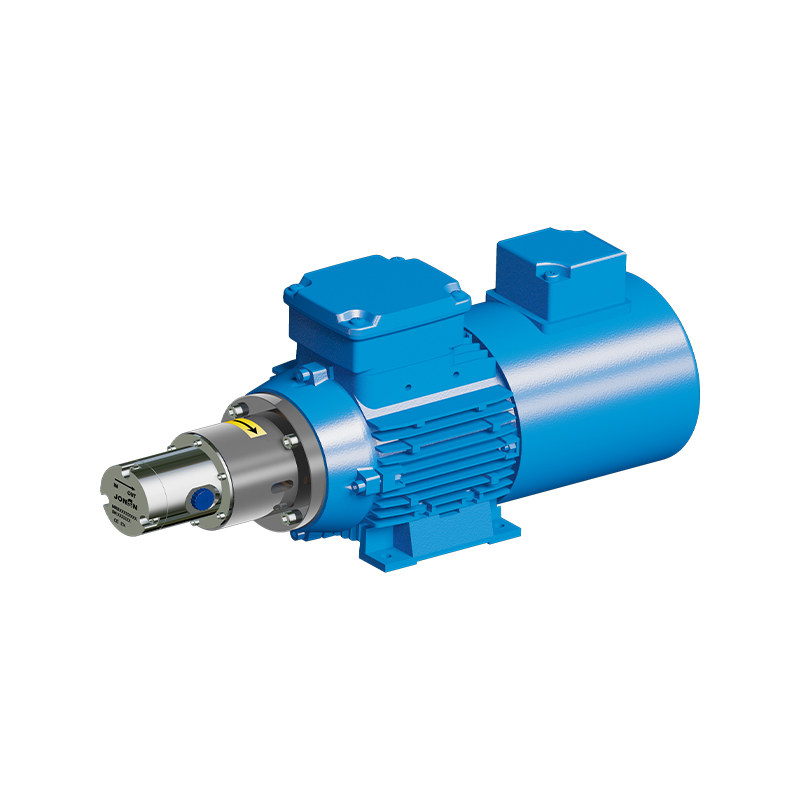
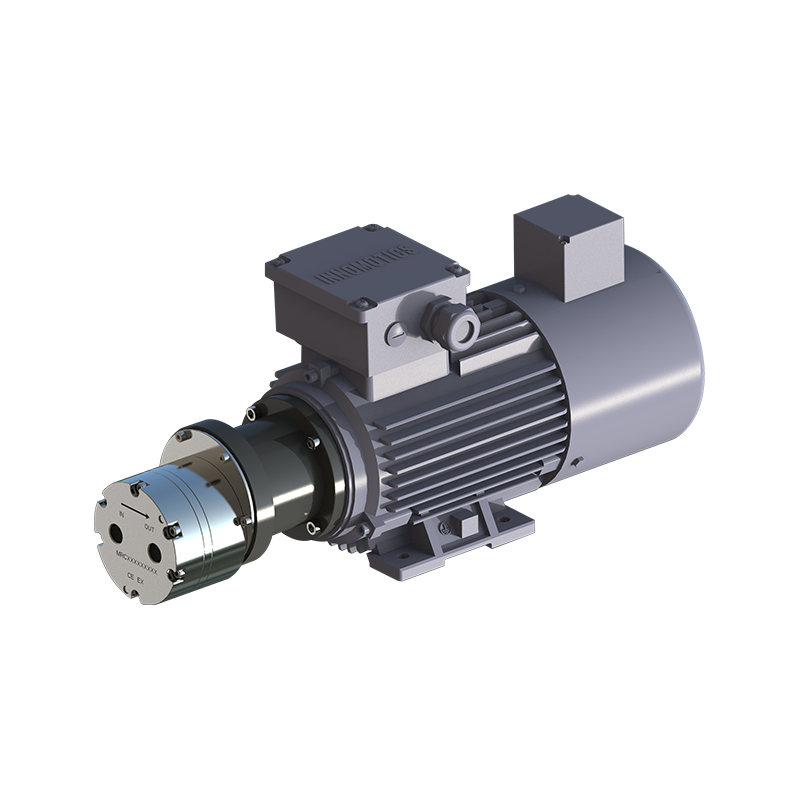
JONSN MR series micro gear pumps provide a unified pumping solution for six high-frequency thermal management scenarios on three pillars: positive displacement without pulsation, full magnetic zero-leakage and an all-PEEK / ceramic flow path.

Industry Pain Points in Precision Cooling

These scenarios share a common requirement set: small size, low vibration, zero leakage, long service life and precise temperature control.

Pain Point 01
SiC Heat Flux Density Surge, Micro-Channel Resistance in Cold Plates
To address kW-class heat dissipation, micro-channel bores inside SiC cold plates have been compressed to 0.3~0.8 mm, with flow path lengths from tens to hundreds of millimetres. The pump must maintain a stable small flow (100~500 ml/min) under high back-pressure (2~5 MPa), and that flow must not decay as cold-plate scaling or resistance changes. Centrifugal pumps perform extremely poorly in the small-flow / high-back-pressure region, where the positive displacement characteristic of gear pumps holds a natural advantage.
Pain Point 02
Zero Leakage Is a Requirement, Not an Added Advantage
A single drop of coolant beside an IGBT / SiC module equals a short circuit and burn-out; internal leakage in medical imaging equipment means millions in equipment write-off plus patient safety risk; leakage in semiconductor equipment means wafer scrap plus production line downtime. The sealing class required by these scenarios far exceeds conventional industrial equipment — full magnetic sealing is the only zero-leakage solution at low pressure loss.
Pain Point 03
Vibration Interference Destroys Precision Equipment Accuracy
Overlay accuracy on semiconductor lithography machines is measured in nanometres, laser machining precision in micrometres, and CT detector signals in photon counts — any micro-vibration originating from the pump can be transmitted through the fluid line to precision core components, causing unacceptable accuracy degradation. The reciprocating pulsation of diaphragm pumps and the impeller imbalance vibration of centrifugal pumps are both unacceptable in such scenarios.
Pain Point 04
Wide Variation in Media Across Scenarios — No Single Pump Fits All
IGBT / SiC uses deionised water or glycol solution, 5G base stations use antifreeze coolant, lasers use deionised water or PAO synthetic oil, and semiconductor equipment uses ultra-pure coolants such as perfluoropolyether (PFPE) — the chemical properties of the cooling media across six scenario classes differ enormously. Integrators want a unified platform at the pump end to accommodate different media and reduce supply-chain complexity.

JONSN Solution: Six Scenario Classes, One Unified Pumping Platform

01
IGBT / SiC Power Module Cooling
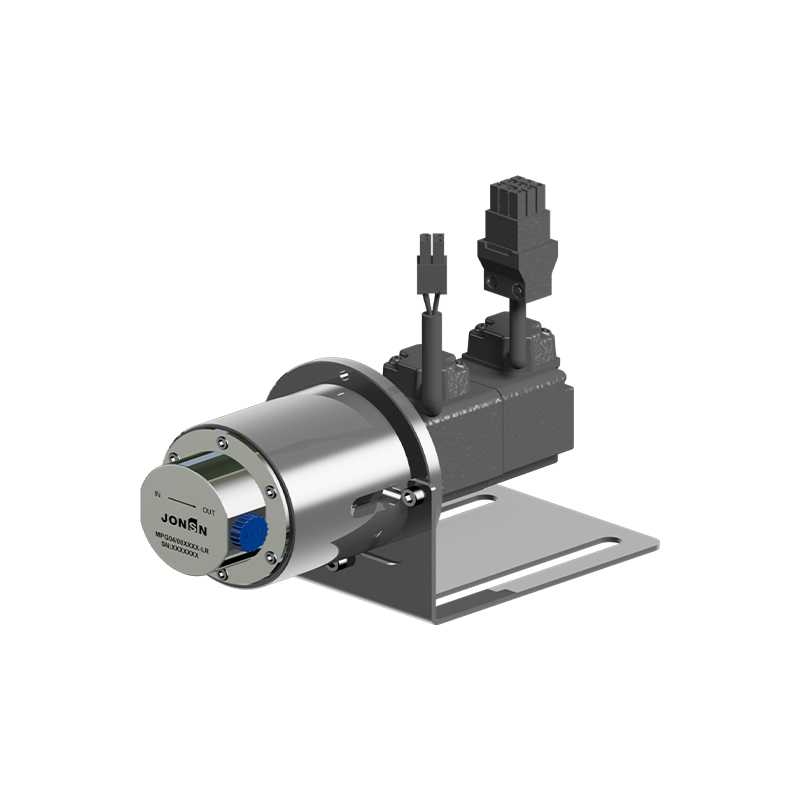
MPG series (1~280 ml/min) and MRA series (100~2000 ml/min) micro gear pumps are embedded directly into the liquid cooling plate of the power module, driving deionised water or glycol coolant through the micro-channels. The positive displacement principle ensures that micro-channel resistance changes in the cold plate (such as minor scaling after long-term operation) do not cause flow decay, keeping the SiC junction temperature inside the design window at all times. The all-PEEK flow path provides zero ionic leaching, keeping coolant conductivity < 1 μS/cm to satisfy the insulation safety requirement of high-voltage power modules.
  • Displacement 40~80 μl/r, pulsation-free low flow, withstands 4 MPa to handle high micro-channel resistance

  • φ22×60 mm, directly welded or screwed onto the cold plate inlet with zero piping distance

02
Wind Power Inverter Cooling
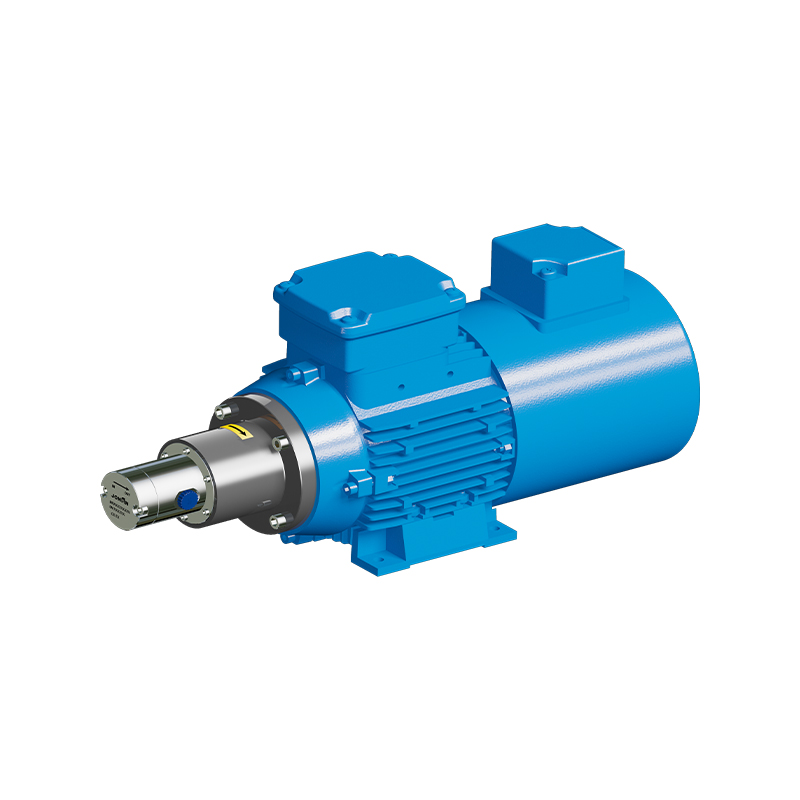
Onshore and offshore wind inverters (10~20 MW per unit) have large liquid cooling plates and long piping runs, so coolant circulation requires stable output at medium-to-large flow. MRB series (400~4800 ml/min) and MRC series (0.8~14 L/min) fit this scenario: 6 MPa pressure resistance handles the static head of high towers (100~160 metres); full magnetic zero-leakage sealing suits the special condition of inaccessible nacelle maintenance — replacing a pump in the nacelle means going offshore or climbing, and the maintenance cost is prohibitive.
  • 0.4~14 L/min wide flow range coverage — one pump set covers units from 5 MW to 20 MW

  • 20,000 h maintenance-free, matching the 2~3 year planned maintenance cycle of offshore wind turbines

03
5G Base Station Liquid Cooling
A 5G AAU (active antenna unit) draws 1~2 kW per site, with demanding thermal requirements yet must be fanless by design (dust proof / waterproof / silent). The liquid cooling plate is integrated inside the AAU, with a micro pump driving coolant circulation to the remote heat exchanger at the tower base. MPG / MRA series fit into the AAU enclosure with a micro form factor of φ22~30 mm, -40 °C cold-start suits outdoor base stations in northern regions, and full magnetic sealing contains antifreeze coolant with zero leakage and zero maintenance.
  • φ22×60 mm (MPG) embedded in the AAU, occupying < 1% of total unit volume

  • -40 °C glycol viscosity-increase start, 30,000 m towers unafraid of severe cold

04
High-Power Laser Cooling
Cooling for fibre lasers, solid-state lasers and semiconductor pump sources places extremely high demands on pump vibration and flow stability — coolant disturbance affects beam quality directly through the thermal lensing effect. MPG / MRA series gear pumps replace the intermittent pulses of diaphragm pumps with continuous pulsation-free output, reducing laser power fluctuation to < 0.5%. Low-friction operation of PEEK + ceramic bearings keeps pump body vibration below 0.1 g (RMS), far below the 0.5~2 g of centrifugal pumps.
  • Pulsation-free continuous flow, laser power fluctuation < 0.5%, M² beam quality free of fluid-path noise

  • Pump body vibration < 0.1 g RMS, no interference with resonator optical alignment

05
Semiconductor Equipment Precision Temperature Control
Temperature control of lithography stages, etch chambers and thin-film deposition chambers demands accuracy of ±0.01~±0.1 °C; any minute fluctuation in coolant flow (typically PFPE perfluoropolyether or deionised water) is captured by high-precision temperature sensors and amplified into process deviation. MPG series achieves programmable slope flow control with ±0.2% repeatability combined with servo closed-loop — not simple on / off switching, but progressive flow ramping at 1 ml/min steps, avoiding overshoot in the temperature control loop.
  • ±0.2% repeatability, programmable 1 ml/min step flow ramp, rejects temperature control overshoot

  • PEEK fully inert to PFPE perfluoropolyether — no swelling, no leaching

  • Full magnetic sealing, zero leakage on wafer lines = zero scrap risk

06
Medical Imaging Equipment Cooling
Cooling systems for CT x-ray tubes (instantaneous thermal power 30~60 kW), MRI gradient coils and RF amplifiers, and linac magnetrons demand medical-device-grade pump reliability — any pump failure causing an over-temperature shutdown could delay patient diagnosis and treatment. MRA / MRB series match the 7×24 in-hospital operating rhythm with 20,000 h maintenance-free service and low vibration (< 0.1 g RMS). Full magnetic sealing eliminates the risk of coolant leakage causing internal short circuits or electric shock to patients.
  • 20,000 h maintenance-free, matching zero-intervention pump-side operation across the 5~8 year life of MRI / CT systems

  • Low vibration + low noise (< 45 dBA), satisfying ward and clinic acoustic environment requirements
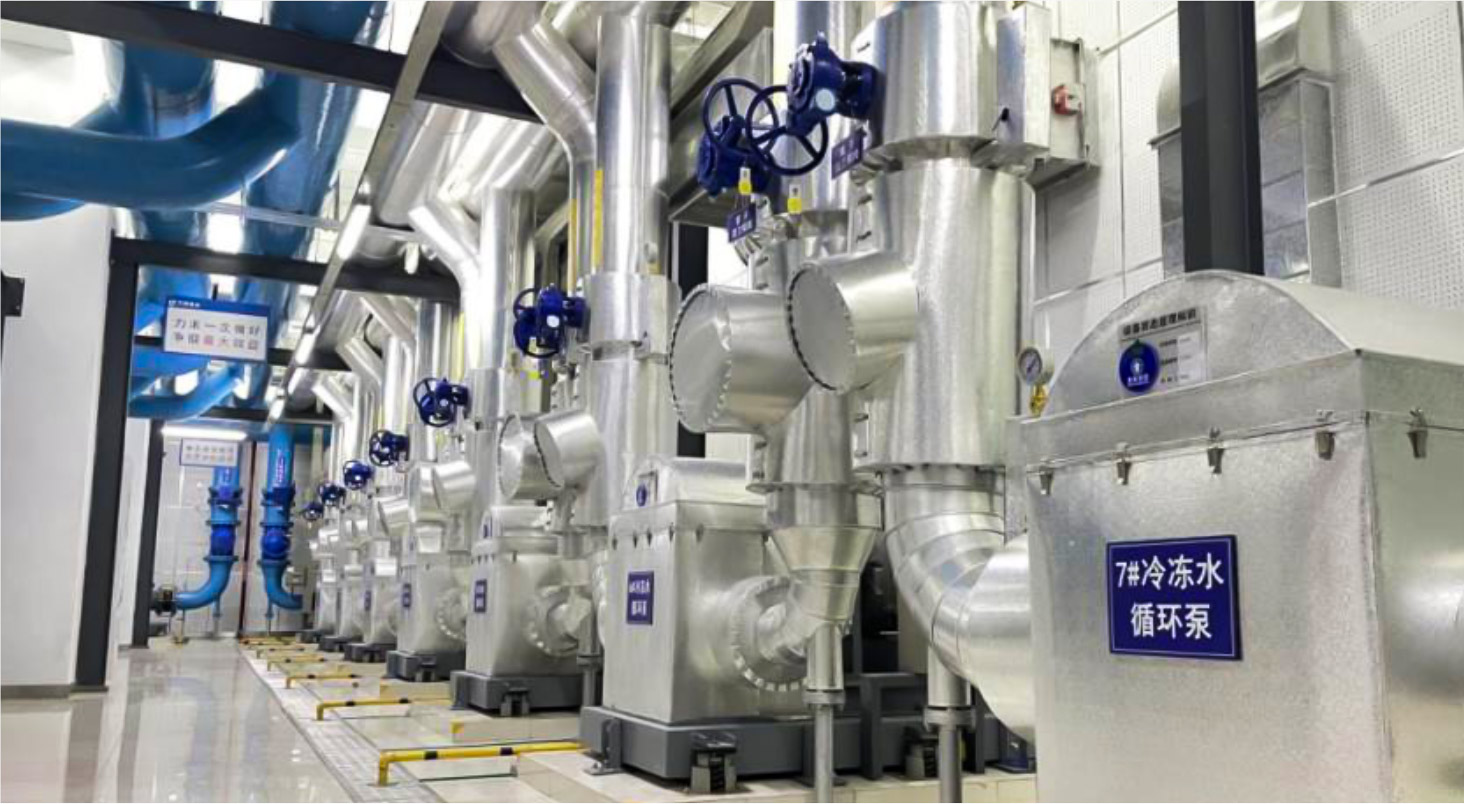
Electronic-Equipment-Thermal-Management3.jpg

Core Value

Years of R&D optimisation and deployment across six thermal management scenarios have equipped JONSN micro gear pumps with distinct competitive strengths.
Value 01
Positive Displacement, Constant Flow — Cold Plate Resistance Changes Do Not Cause Decay
After long-term operation, micro-channel scaling and rising hydraulic resistance in power-electronics cold plates cause centrifugal pump flow to fall and temperature control to fail. The gear pump positive displacement principle recognises only rotational speed, not back-pressure, so flow stays constant and the SiC junction temperature always stays inside the safe window.
Value 02
Full Magnetic Zero Leakage: The Common Baseline for Six Scenarios
IGBT short circuits, semiconductor wafer scrap, medical equipment electric shock, laser optical element contamination — the consequence of leakage in every scenario is catastrophic. Full magnetic sealing plus a static O-ring provides an absolute zero-leakage guarantee — not "low leakage", but "zero leakage".
Value 03
Low Vibration, Low Noise — Guarding Precision
Pump body vibration < 0.1 g RMS + operating noise < 45 dBA + pulsation-free continuous flow — these three numbers make JONSN gear pumps the definitive answer for vibration-sensitive scenarios such as lasers, semiconductor equipment and medical imaging. Diaphragm pumps pulsate heavily and centrifugal pumps vibrate heavily; neither can match.
Value 04
Full Media Compatibility, One Pump for All
PEEK + zirconia ceramic + PTFE sealing — this material combination is chemically inert to deionised water, glycol, PAO synthetic oil and PFPE perfluoropolyether. Six scenarios, six media, and no need to select six pumps of different materials — one platform, one pump covers all.
Value 05
Micro Form Factor, Invisible When Integrated
MPG at φ22×60 mm, smaller than a can of cola. Directly welded onto the SiC cold plate inlet, embedded inside the AAU enclosure, mounted into the laser water-cooling module — eliminating the pump's "footprint anxiety" at system level.
Value 06
Automotive-Grade Validation, Backward Compatible with Precision Scenarios
JONSN gear pumps have passed automotive thermal management tests including -40 °C start-up, 15 g vibration and IP67 protection. The environmental conditions of semiconductor, medical and laser scenarios are generally less demanding than automotive — serving precision industry with automotive-validated pumps gives reliability you can point to.

Please Contact Us!

ADDRESS

Building A3, Qiuyue Science and Technology Park, Ganzhou Economic and Technological Development Zone, Jiangxi Province

Tel.

0086-21-34720020

Follow Us

CopyRight © 2026 - Shanghai JONSN Fluid Equipment Co., Ltd.  All rights reserved  Sitemap All tags  Designed by Zhonghuan Internet
WHAT ARE YOU LOOKING FOR?
*
This field is required
Total quantity you need
*
This field is required
*
This field is required
Email format error
Due to email instability, you might miss our correspondence. Please provide your phone number for alternative contact.
This field is required
Telephone information is wrong!
Send Message
Get Custom Fluid Dosing Selection Solution
Starting a new project? Contact us for tailored pump solutions — from inlet specs and pipe sizing to motor matching and drawings — designed to fit your working conditions and accelerate your R&D cycle.
Company Name
*
This field is required
Email
*
This field is required
Email format error
Phone
This field is required
Telephone information is wrong!
WhatsApp
Message
*
This field is required
Send Message