







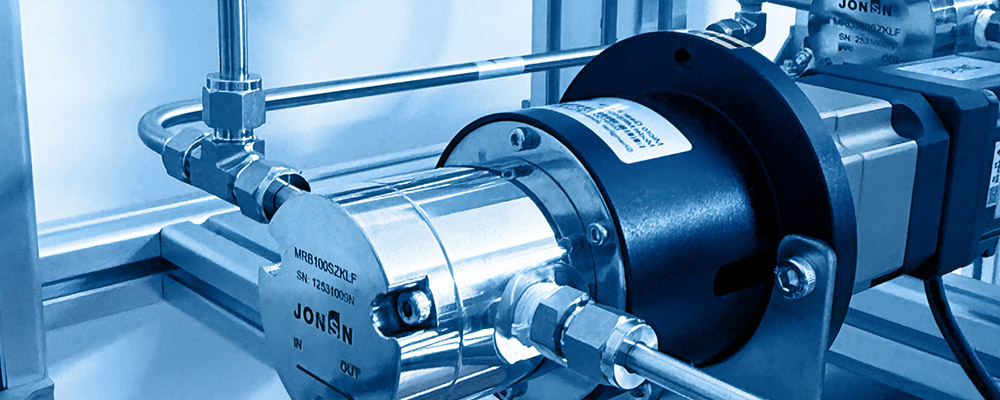
Chemical Gear Pump Guide: Selecting a Micro Dosing Pump for Corrosive Media
A chemical gear pump is rarely the most expensive item on a dosing skid, yet it usually decides whether a batch meets specification. When a few millilitres per minute of catalyst or inhibitor must reach a reactor at a fixed ratio, the outcome depends on how that one component behaves under back pressure, corrosion and continuous duty.
This guide is written for process engineers and skid builders specifying a micro dosing pump for corrosive or high-purity chemistry. It explains how a gear dosing pump generates repeatable flow, where a magnetic drive gear pump earns its cost in acid and solvent service, and which parameters predict field performance rather than catalogue performance.
Key Takeaways
A dosing gear pump meters by displacement per revolution, so flow follows speed instead of line pressure.
Sealless magnetic coupling removes the rotating shaft seal, the most common loss-of-containment point in corrosive service.
The wetted material stack, not headline flow rate, decides whether a magnetic gear pump survives concentrated acid or caustic.
Dead volume and pulsation decide whether a micro gear pump suits microreactor feed, sampling or plating bath work.
What Makes a Chemical Gear Pump Different from Water Transfer
Transfer duty asks a pump to move volume. Dosing duty asks it to repeat a number, often a ratio measured in parts per million and judged over thousands of hours rather than one shift.
Corrosion, Cleanliness and the Cost of One Drop
A swollen elastomer or a worn shaft seal turns a metering problem into a contamination problem: trace metal leaching can scrap an electronic-grade bath, and a weeping seal in amine service is both a solvent loss and an exposure risk. That is why a chemical gear pump is specified by wetted materials and sealing class first, and by flow rate second. Hazardous facilities treat loss of containment as a design-basis event, as set out in process safety management guidance for highly hazardous chemicals.
Why Pulsation Breaks a Reaction
Reciprocating diaphragm and plunger designs deliver fluid in bursts. At a microreactor inlet, each burst becomes a local concentration spike, and a spike becomes an exotherm or an off-spec intermediate. A rotary gear dosing pump moves fluid continuously, which is why pulse-free delivery is written into acceptance testing rather than treated as a preference.
How a Dosing Gear Pump Produces Repeatable Flow
Displacement per Revolution
Two meshing gears trap a fixed volume in each tooth gap and carry it from suction to discharge. Because that volume is geometric, output equals displacement multiplied by speed, and a servo drive holds speed to a fraction of a percent. A well-machined dosing gear pump therefore holds within roughly ±0.5% of setpoint across a wide viscosity band, provided internal clearances stay stable. That linearity is also what makes a micro dosing pump practical in pilot plants: one unit covers a 1:100 turndown, so a recipe change becomes a screen edit.
Sealless Magnetic Containment
In a magnetic gear pump, the motor turns an outer magnet ring that drives an inner rotor through a static containment shell. No shaft penetrates the housing, so the only sealing interfaces are static O-rings. That is the difference between low leakage and no leak path, and it is why a magnetic drive gear pump is often the default for fuming acids, amines and low-boiling solvents.
| Capability | Typical range | Why it matters |
|---|---|---|
| Displacement | 40 μl/r to 100 cc/r | Defines flow per revolution, so dose scales with speed. |
| Flow | 1 ml/min to 67 L/min | One platform spans trace injection to loop circulation. |
| Differential pressure | 0.5 to 25 bar | Holds setpoint when injecting into a pressurised header. |
| System pressure | 4 MPa, 6 MPa on high-flow frames | Lets a magnetic gear pump sit inside a closed loop. |
Matching a Micro Dosing Pump to the Chemistry
Selection usually starts with the fluid rather than the flow rate, because corrosion and shear behaviour eliminate more options than capacity does.
Viscosity and Shear Sensitivity
A micro dosing pump sized for water loses volumetric efficiency on a 50,000 mPa·s resin unless a high-viscosity frame is used. Wider clearances and lower speeds handle thick media, while tight clearances limit internal slip on thin solvents. A gear dosing pump feeding shear-sensitive polymer solutions also needs low rotor speed, because excess shear degrades long-chain additives.
Back Pressure and Dead Volume
Back pressure changes internal slip; dead volume changes how much of the previous batch reaches the next one. For a micro gear pump on sampling duty, a sub-millilitre flow path matters more than a small gain in rated accuracy, because carryover distorts results far more than a fraction of a percent of flow error.
| Media family | Wetted path | Watch-outs |
|---|---|---|
| Concentrated mineral acids | C-276 head, PEEK gears, PTFE seals | Avoid 300-series stainless at low pH with chlorides. |
| Caustic streams | 316L or C-276 head, PEEK internals | Stress corrosion cracking above about 60 °C. |
| Amine solutions | 316L or duplex head, magnetic coupling | 20 to 80 mPa·s viscosity plus foam entrainment. |
| Polar solvents | PEEK, PTFE, zirconia ceramic contact set | Elastomer swell; verify seal grade per solvent. |
| Electronic-grade reagents | PEEK path with ceramic shafts | Ion leaching and particle generation limits. |
Where a Magnetic Drive Micro Pump Fits
One sealless architecture serves several duties, so recognising them early simplifies spares strategy: a single magnetic drive micro pump platform can cover injection, sampling and bench work with different heads and drives, and each unit keeps a factory record of its built clearances.
| Process step | Typical duty | Design focus |
|---|---|---|
| Microreactor feeding | 0.1 to 100 ml/min, pulse-free | Continuous displacement, low hold-up. |
| Additive injection | ppm level, multi-stream | Synchronized ratio across channels. |
| Bath replenishment | 0.5 to 14 L/min | Corrosion resistance, zero metal transfer. |
| Online sampling | Millilitre slugs, fast flush | Minimal dead volume, low carryover. |
Specifying a pump for a corrosive duty?
Send the medium, flow, pressure and temperature window, and the engineering team will return a matched micro gear pump selection with material options and dimensional drawings.
Send an InquiryView Chemical Solutions →Five Checks Before You Specify a Dosing Gear Pump
Most field failures trace back to a parameter that never reached the datasheet, and a gear dosing pump is no exception. The checklist below separates a dosing gear pump that lasts a turnaround cycle from one that is rebuilt twice a year.
Media, Temperature and Cleanliness Class
Record the full composition, not just the main component: chloride content, dissolved gas, suspended solids and cleaning regime all influence material choice. For a chemical gear pump in a hazardous area, add the area classification to the same table, because it changes both motor selection and documentation.
Pressure Envelope and Redundancy
State the maximum back pressure, not the normal value. A magnetic drive gear pump rated for 4 MPa can still lose flow against a closed discharge valve, and trace injection duty often justifies a duty and standby pair with sub-second changeover.
Control Interface and Data Trail
A modern micro dosing pump is integrated through RS485 or Modbus rather than a local potentiometer. Confirm which protocol the skid PLC expects, whether flow must be logged, and whether recipe parameters survive a power loss.
| Check | Question to ask | Typical target |
|---|---|---|
| Flow accuracy | Volumetric or mass based? | Within ±0.5% of setpoint |
| Pulsation | Measured at port or downstream? | Below 1% of mean flow |
| Dead volume | How much flush between media? | Under 1 ml for sampling |
| Sealing class | Any dynamic seal in the path? | Static seals only |
Pump Types Compared for Corrosive Service
Three families dominate chemical dosing, and each answers a different brief. The magnetic gear pump wins where flow stability, containment and compact size matter at once.
| Criterion | Diaphragm or plunger | Magnetic gear pump |
|---|---|---|
| Flow profile | Pulsed, dampener often needed | Continuous, pulsation typically below 1% |
| Leak path | Diaphragm or packing plus valves | Static O-rings, no rotating seal |
| Viscosity | Limited by check valves | 0.4 to 500,000 mPa·s on matched frames |
| Footprint | Large with dampener | Compact, mounts at the injection point |
Matching the Platform to the Duty
Once the fluid and pressure envelope are fixed, the remaining question is which frame covers the flow band with margin. Each platform below can be supplied with alternate wetted materials and drive options.
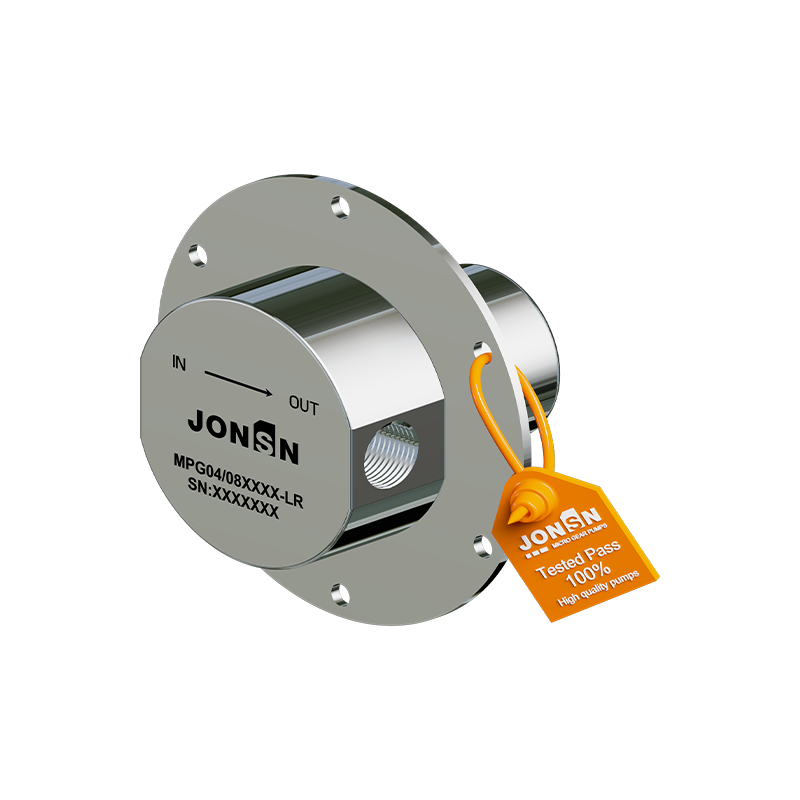
MPG Micro Gear Pump
Micro dosing pump, 1 to 280 ml/min, 40 or 80 μl/r, 4 MPa, for trace injection and microreactor feed.
View Product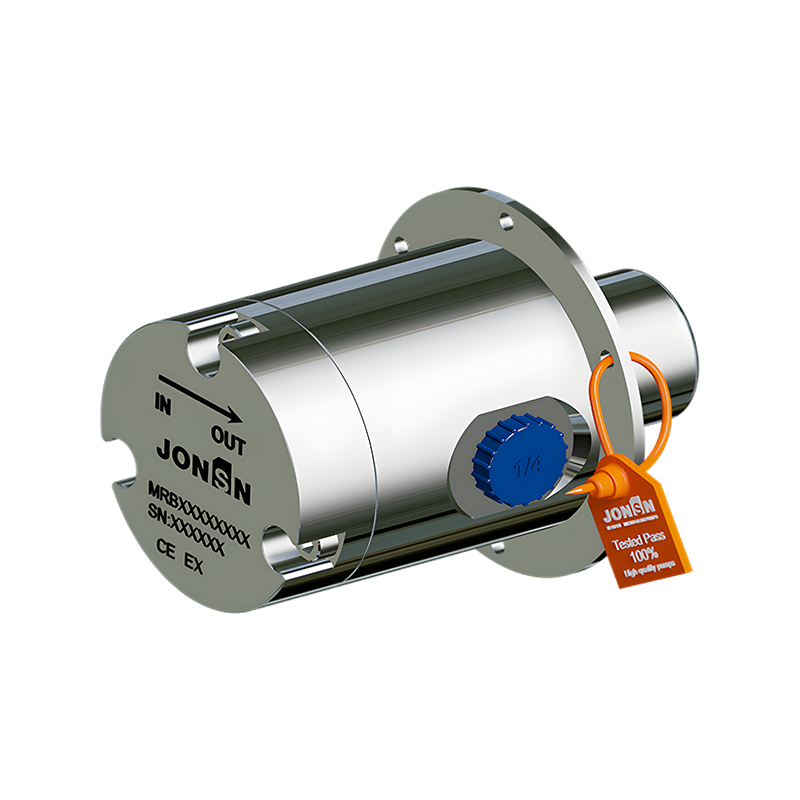
MRB Micro Gear Pump
Sealless magnetic drive micro pump, 400 to 4,800 ml/min, for bath replenishment and fine chemical delivery.
View Product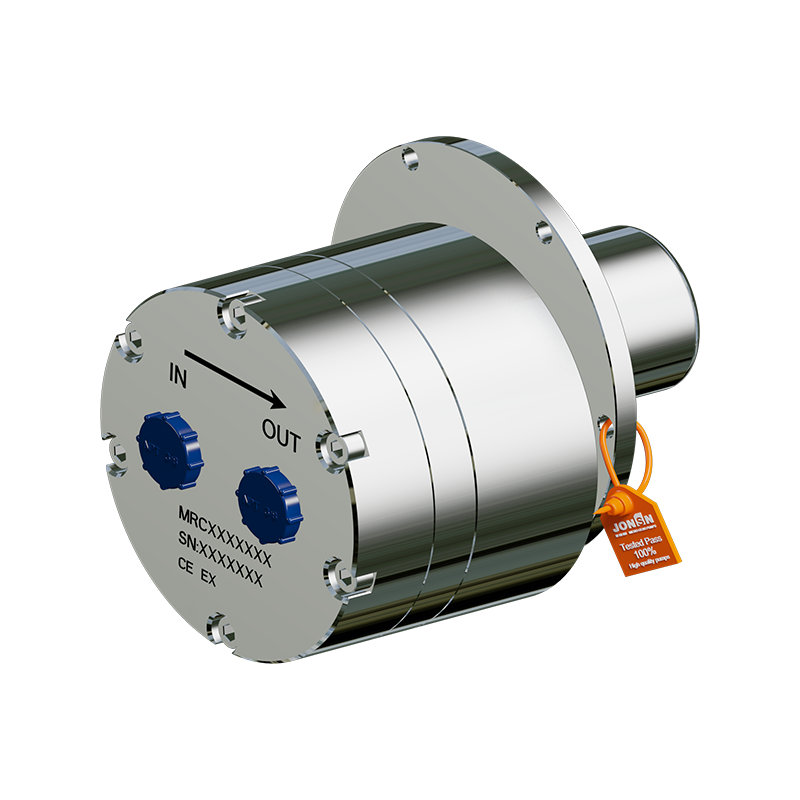
MRC Gear Pump
0.8 to 14 L/min, 25 bar differential, 316L or C-276 head, for pressurised dosing loops.
View ProductConclusion
Chemical dosing failures are rarely dramatic. They appear as a drifting ratio, a discoloured bath, or a seal that weeps after six months, and each symptom traces back to specification: a material that was close enough, a seal that was conventional, a curve read at the wrong back pressure.
A chemical gear pump chosen on displacement, wetted materials and sealing class resolves most of that risk at the design stage. Where the medium is aggressive and duty is continuous, the magnetic drive gear pump arrangement removes the most failure-prone interface, and a correctly sized gear dosing pump keeps ratio control inside the band the process actually needs.
If you are looking for a reliable chemical gear pump manufacturer, choose JONSN. Figures above are typical industry ranges compiled from public sources and manufacturer datasheets, and may vary by model, medium and installation.
Need a pump that holds its ratio for 20,000 hours?
Share your medium, duty point and installation envelope. The team will confirm a frame, propose wetted materials and supply CAD data within 24 hours.
Get a QuoteView ProductsFAQ
How accurate is a dosing gear pump in real service?
A well-specified gear dosing pump normally holds ±0.5% of setpoint with servo speed control and stable clearances. Field accuracy depends more on viscosity consistency and degassing than on the micro dosing pump alone.
When should a magnetic gear pump replace a diaphragm metering pump?
Choose the magnetic gear pump when the medium is corrosive or hazardous, when pulsation distorts the reaction, or when viscosity defeats check valves. Diaphragm designs still suit very high discharge pressures with clean, thin fluids.
Can a magnetic drive micro pump run dry?
Brief dry running is survivable for ceramic and PEEK contact sets, but sustained dry operation accelerates wear because the medium also cools and lubricates. A dry-run signal or suction level interlock is the practical safeguard for a magnetic drive micro pump on intermittent duty.
What dead volume suits sampling duty on a micro gear pump?
Below one millilitre allows complete displacement with a short flush and keeps cross-contamination low. A micro gear pump with a multi-channel valve can serve several sampling points and replace a bank of separate units.
How is a magnetic drive gear pump maintained in a plant?
Wear parts are the gear pair, bearings, static seals and coupling element. Two-stage modular housings allow on-site replacement without removing piping, and the factory code lets new clearances match the original build. A magnetic drive gear pump serviced this way returns to as-built performance within hours, and the same approach applies to any magnetic drive micro pump in the range.
Which standards apply to sealless chemical pump selection?
Quality systems are typically certified to ISO 9001 quality management requirements, while hazardous facilities also work to accidental release rules such as the US EPA risk management program requirements. A dosing gear pump datasheet should state which of these the manufacturer certifies against, and any chemical gear pump supplier should be able to show the certificate rather than describe it.