



Environmental & Water TreatmentEnvironmental & Water Treatment
Environmental & Water Treatment

Waste Liquid & Sludge

2026-11-20
View:18
Applications · Environmental & Water Treatment

JONSN Pumps in Waste Liquid, Hazardous Waste and Sludge Treatment

Sodium hypochlorite, PAC / PAM, acids and alkalis, urea — the viscosity is low in every case, yet the media crystallize, carry solids and string.
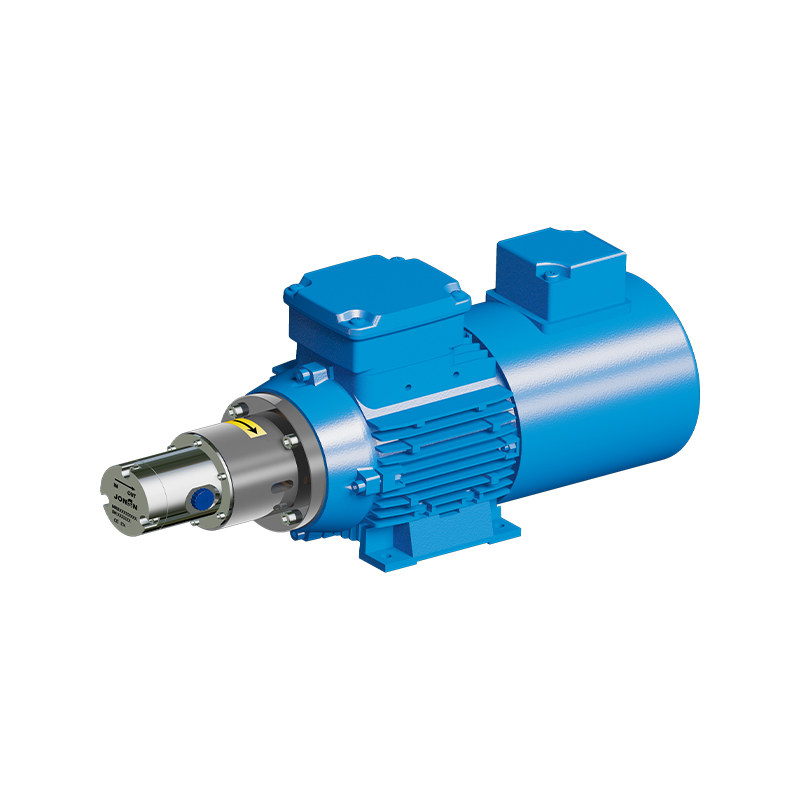
DP · High-viscosity & solids type
MRB · Low-viscosity corrosive type
Anti-blockage
Anti-crystallization
Heat tracing
24h unattended operation
Life-cycle cost
矩形 6备份 9.jpg
Content Summary

1. The opponent in this scenario is not viscosity, it is dwell time. Once the medium stops in a dead corner of the flow path, tens of hours later it has become a solid.

2. Anti-blockage must be achieved by structure, not by filtration — a filter becomes a new blockage point and maintenance point, and PAM passing a screen is sheared and degraded.

3. Unattended operation cannot be achieved by adding sensors, but by reducing the reasons to "send someone to site": no dynamic seal, no valve, no wear parts, dry-run without damage.

4. Model selection depends on the form of the medium: if it strings, if it coats the wall, if it contains particles, go DP; if it flows like water but crystallizes or corrodes, go MRB.

The Pumps in Environmental and Water Treatment

The pumps on an environmental and water treatment site rarely fail on "can it pump the medium at all", they fail on "can it run for a month without anyone going near it". This article follows the order of medium characteristics, failure modes, selection weights, structural countermeasures, model division of labour and typical scenarios.

I. The Media List and Where the Real Difficulty Lies

Let's lay out the media first. The common media of environmental and water treatment applications have their real difficulty almost never in the viscosity.

Medium
Common Media in Environmental & Water Treatment
MediumCommon FormDifficulty in ConveyingDirect Requirement on the Pump
Sodium hypochlorite (NaClO)10%–12% available chlorine, strongly alkalineWater loss precipitates salt crystals that block the flow passage and the sealing faces; highly corrosive to metalDead-corner-free flow path, corrosion-resistant material, flushable
PAC (polyaluminium chloride)Liquid, containing insoluble solidsSuspended solids settle in low-velocity zones, forming hard scale and wearing the wetted partsAnti-sediment structure, wear resistant, strippable for cleaning
PAM (polyacrylamide)0.1%–0.5% solutionHigh viscosity, long-chain polymer, easily chain-broken by shear; when dry it forms a hard film and strings during operationLow shear, large clearance, valveless structure
Acids and alkalis (NaOH / H₂SO₄ / HCl)30% NaOH, 98% H₂SO₄, etc.Crystallizes as concentration and temperature change; HCl volatilizes and corrodesMaterial matching, heat tracing and insulation
Urea solutionAround 50%Crystallizes at low temperature, absorbs moisture and cakesHeat tracing, insulation, drain-down on shutdown

Not a single item in this table is "viscosity too high to pump". The real opponent is dwell — once the medium stops in some corner, tens of hours later it has become a solid.

II. Four Failure Modes, Pointing to the Same Thing

On sludge dewatering and hazardous waste disposal lines, the failure modes of pumps are highly repetitive and can be grouped into four classes.

1. Seized valve seats
Diaphragm pumps and metering pumps control the flow direction by check valves. Once a salt crystal or a dry PAM film settles between the valve ball and the valve seat, the valve can no longer close tightly, the flow goes out of calibration, or the pump simply stops drawing. This failure is especially common at the sodium hypochlorite and PAC stations.
2. Scaling and blockage in the flow path
The insoluble solids of PAC deposit in elbows, reducers and low-velocity pipe sections; after a few months the flow cross-section is reduced to half. The symptom is a slow decline in flow, and operators usually raise the pump speed to compensate, which accelerates the wear.
3. Shear degradation and stringing entanglement
PAM is a long-chain polymer whose flocculating capacity depends precisely on chain length. High shear breaks the molecular chains: the pump outlet looks normal in flow, but in the sludge it fails to flocculate and the chemical consumption rises. At the same time, PAM solution strings and entangles around the rotor, the gears and the shaft seal.
4. Aging of seals and wear parts
Dynamic seals have a very short life in media containing solids or crystals; once they leak, escaping waste liquid is both a safety issue and a compliance issue. Diaphragms, hoses and stators are consumables in themselves, and frequent part replacement means frequent shutdown.
Behind the four failure modes is one logic: this scenario tolerates a simple structure far more than it rewards good-looking parameters. The fewer the parts, the fewer the blockage points; the fewer the interfaces to maintain, the more feasible unattended operation becomes.

III. Five Real Selection Weights

Working back from the failures above, the ranking of the selection weights in this scenario is clear.

1
Anti-blockage comes first
It is not solved by adding a filter — the filter itself becomes a new blockage point and a new maintenance point, and a PAM solution passing a screen is sheared and degraded. Anti-blockage must be built into the structure of the pump.
2
Anti-crystallization comes second
Crystallization is not only a temperature issue, it is a question of whether there is a stagnation zone. Pump chamber, gear mesh zone, inlet and outlet transitions — wherever the velocity approaches zero, crystallization starts there.
3
Heat tracing comes third
For urea, concentrated caustic solution, and the sodium hypochlorite lines of northern winters, temperature has to be managed as a process parameter rather than as an ambient condition.
4
24h unattended operation comes fourth
Hazardous waste and sludge stations are usually not densely staffed; one shift may include only two patrol rounds. The pump must be able to tolerate an operator deviation without being destroyed on the spot.
5
Life-cycle cost comes fifth, and it decides the final value of the first four
A pump with a low purchase price that needs a new diaphragm every quarter and a new stator every half year costs far more over two years than the price difference of the equipment itself.
One boundary needs to be stated: the selection weights of this scenario do not lie in explosion-proof certification level, nor in ultra-pure conveying capability. It is neither a flammable, explosive solvent duty nor a semiconductor-grade ultra-pure medium duty. Spending budget on these two usually brings no corresponding improvement in operation; spending it on flow-path design, material matching and heat-tracing configuration pays back much more directly.

IV. JONSN's Response: Designing the Pump as a Conveying Unit

JONSN's approach in this segment is not to raise a single parameter, but to consider the pump, the flow path, the temperature and the maintenance interface together. The following five items correspond to the five weights above.

Anti-blockage
One fewer part, one fewer blockage point
DP and MRB are both positive-displacement gear structures, forcing the medium forward by gear mesh, with no check valve, no diaphragm and no hose. This means the medium has only one passage through the pump body, and the failure mode "valve ball held open by crystallization" does not exist. The inlet and outlet use a straight-through layout, so the flow path is short with few reducers, and solids-bearing media has no buffer zone in which to settle. The pump head can be quickly disassembled, so PAC scale or an accumulated PAM dry film can be cleaned on site without returning to the factory.
Anti-crystallization
Leave the medium no chance to dwell
Against crystallization, the design takes three actions: first, eliminate the stagnation cavities inside the pump chamber, with the gear-to-casing end clearance controlled so that no liquid-holding hollow is formed; second, allow drain-down on shutdown, with the low points arranged at the inlet and the outlet so the medium does not stay in the pump overnight; third, support reverse flushing, so the line can be cleaned without disassembling the pump.
For salting-out media such as sodium hypochlorite, flushability matters more than wear resistance — once crystals have formed they are not only a blockage but also an abrasive between the rotating parts.
Heat tracing
Managing temperature as a conveying parameter
The pump head offers a jacketed heat-tracing option, connecting to a hot water, low-pressure steam or glycol circuit, and it can also be fitted with an electric heat-tracing belt and an insulation cover. The tracing covers the pump head and the inlet and outlet flange sections, not merely the pipeline — many crystallization failures occur precisely at the junction where "the pipeline is hot and the pump is cold".
The aim of temperature control is not to heat the medium itself, but to keep the temperature at every point inside the pump steadily above the crystallization point, including during shutdown periods.
24h unattended operation
Reduce the reasons to send someone to site
Unattended operation is not achieved by adding sensors; it is achieved by reducing the reasons to send someone to site. Magnetic coupling drive cancels the dynamic seal: the medium is completely enclosed by the static seal inside the pump chamber, so there is no seepage from seal wear and no external flushing water is needed. This single item removes the most common patrol item on an environmental site.
The magnetic coupling slips on overload, interrupting torque transmission without damaging the pump body, which is equivalent to a built-in mechanical protection. When a line is blocked or the medium unexpectedly thickens, the pump will not burn out; it can simply be restarted once the condition clears. Combined with the wear-part-free structure, maintenance changes from "periodic part replacement" to "periodic inspection", and that is what makes 24-hour unattended operation feasible in engineering terms.
Cost
Account for the life cycle, not the purchase price
Put the three pump types on a single sludge dewatering station and calculate three years, and the difference is obvious: diaphragm pumps need periodic replacement of diaphragms, valve balls and valve seats; the stator of a screw pump is a consumable; the hose of a peristaltic pump is replaced on a monthly cycle. Gear pumps have none of these consumables; the main maintenance is seals and bearings, with a far longer interval.
Another cost that is often overlooked is chemical and labour. Excessive dosing of PAM caused by shear degradation, repeated recalibration caused by flow drift, shutdown cleaning caused by blockage — none of these enter the equipment ledger, but all of them enter operating cost. The fixed displacement per revolution of a positive-displacement structure keeps the metering accuracy at the ±0.5% level, so a single calibration can be used for a long time.

V. Recommended Pump Types: The Division of Labour Between DP and MRB

The division between the two series is not based on industry, it is based on the form of the medium.

The DP series targets high-viscosity and solids-bearing duties: PAM solution, solids-bearing sludge and concentrated slurry. It uses a low-speed design and a large gear clearance to reduce the shear on the long chains of PAM; the wetted parts can be specified in wear-resistant materials to handle the particles in PAC and sludge.

The MRB series targets low-viscosity waste liquids: sodium hypochlorite, acids and alkalis, urea solution and all kinds of hazardous waste liquids. The emphasis is material matching and seal reliability; the pump body can be PP, PVDF or PTFE lined, with ceramic or corrosion-resistant alloy gears.

Selection
Typical Selection Ranges — DP Series vs. MRB Series
ItemDP SeriesMRB Series
Applicable mediumHigh-viscosity PAM, solids-bearing slurry, sludgeSodium hypochlorite, acids and alkalis, urea, low-viscosity waste liquid
Typical flow0.5–60 L/min0.1–30 L/min
Outlet pressure≤ 16 bar≤ 10 bar
Applicable viscosity≤ 50,000 mPa·s≤ 1,500 mPa·s
Solids capacity≤ 30% (particle size ≤ 3 mm)Recommended ≤ 1%
Wetted material316L / duplex steel / ceramic gearsPP / PVDF / PTFE lining + ceramic gears
Heat tracingPump-head jacket / insulation coverPump-head jacket / electric heat tracing
DriveMagnetic coupling, zero leakageMagnetic coupling, zero leakage
The table shows typical selection ranges; the actual parameters are subject to the measured medium concentration, temperature and solids content, and to the final selection confirmation.

The model-selection rule can be reduced to two sentences: if the medium strings, coats the wall and contains particles, go DP; if it flows like water but crystallizes or corrodes, go MRB.

VI. Three Typical Scenarios

The same structural logic shows up as three different values in three positions.

1. Quantitative transfer of hazardous waste liquid
A hazardous waste disposal site receives waste liquid of mixed sources and many batches — the same pipeline carries acidic waste today and alkaline waste tomorrow. This duty fears two things most: residue crystallizing or reacting inside the pump, and a transferred volume that does not reconcile with the accounts. The value of the MRB series in this position is "emptiable, flushable, metered". Between batches a short flush with water or neutralizing liquid is used; the pump body has no stagnation cavity, so residue does not carry over from one batch to the next; and positive-displacement metering allows the transferred volume to be converted directly from the rotation speed, which reconciles with the hazardous waste management ledger.
2. PAM dosing for sludge dewatering
PAM dosing is the most demanding position for a pump on the whole dewatering line. The concentration is typically 0.1%–0.5%, the viscosity can reach several thousand mPa·s, and it is extremely sensitive to shear — if the pump runs too hard, half of the chemical is wasted. The DP series handles this with low speed, large gear clearance and a short flow path, keeping the shear within what the molecular chains can tolerate. The dosing rate is adjusted by rotation speed and linked with the sludge flow signal to achieve proportional dosing. Compared with a diaphragm pump, there is no risk of a valve ball seizing on a PAM dry film; compared with a centrifugal pump, there is no high-speed impeller causing shear degradation.
3. Solids-bearing slurry conveying
For sludge, concentrate and solids-bearing waste liquid, the difficulty is to "pump it and still keep it from settling". The piping design must guarantee sufficient velocity, while on the pump side the flow passage must not become a deposition zone. The large-clearance gears and the straight-through flow path of the DP series prevent particles from arching across the passage; after a short shutdown, reverse rotation can push the deposits back. For duties with widely varying solids content, variable-frequency speed control is recommended, matching the incoming material by flow rate rather than by time.

Please Contact Us!

ADDRESS

Building A3, Qiuyue Science and Technology Park, Ganzhou Economic and Technological Development Zone, Jiangxi Province

Tel.

0086-21-34720020

Follow Us

CopyRight © 2026 - Shanghai JONSN Fluid Equipment Co., Ltd.  All rights reserved  Sitemap All tags  Designed by Zhonghuan Internet
WHAT ARE YOU LOOKING FOR?
*
This field is required
Total quantity you need
*
This field is required
*
This field is required
Email format error
Due to email instability, you might miss our correspondence. Please provide your phone number for alternative contact.
This field is required
Telephone information is wrong!
Send Message
Get Custom Fluid Dosing Selection Solution
Starting a new project? Contact us for tailored pump solutions — from inlet specs and pipe sizing to motor matching and drawings — designed to fit your working conditions and accelerate your R&D cycle.
Company Name
*
This field is required
Email
*
This field is required
Email format error
Phone
This field is required
Telephone information is wrong!
WhatsApp
Message
*
This field is required
Send Message