



Liquid CoolingLiquid Cooling
Liquid Cooling
HomeCaseLiquid CoolingCoolant Filling & Test Rigs

Coolant Filling & Test Rigs

2026-11-25
View:9
Applications · Liquid Cooling · Line Filling and Testing

Liquid Cooling Line Filling and Testing: Quantitative Filling with Precision Magnetic Gear Pumps

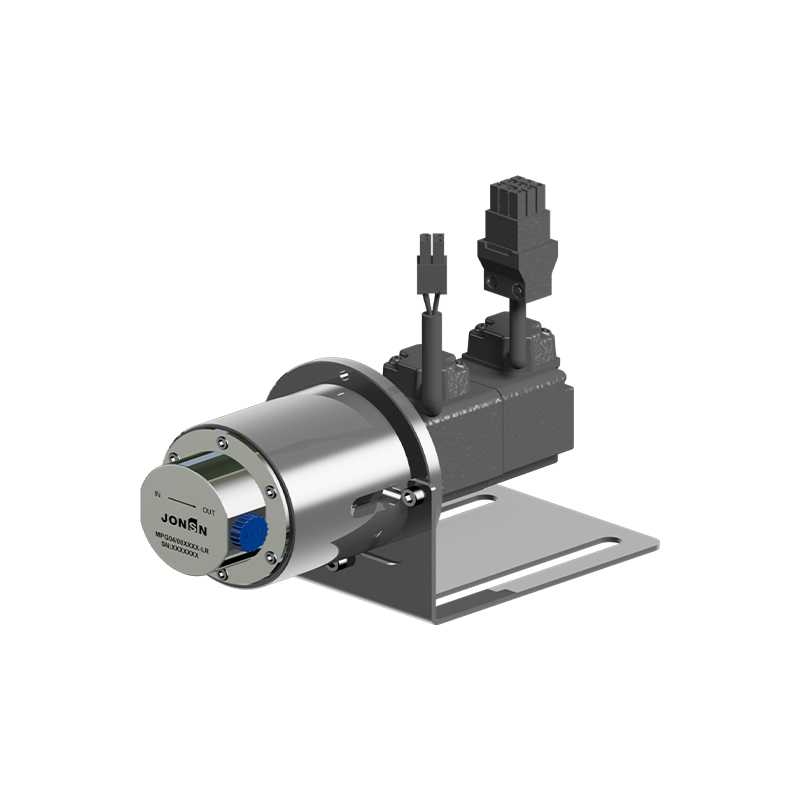
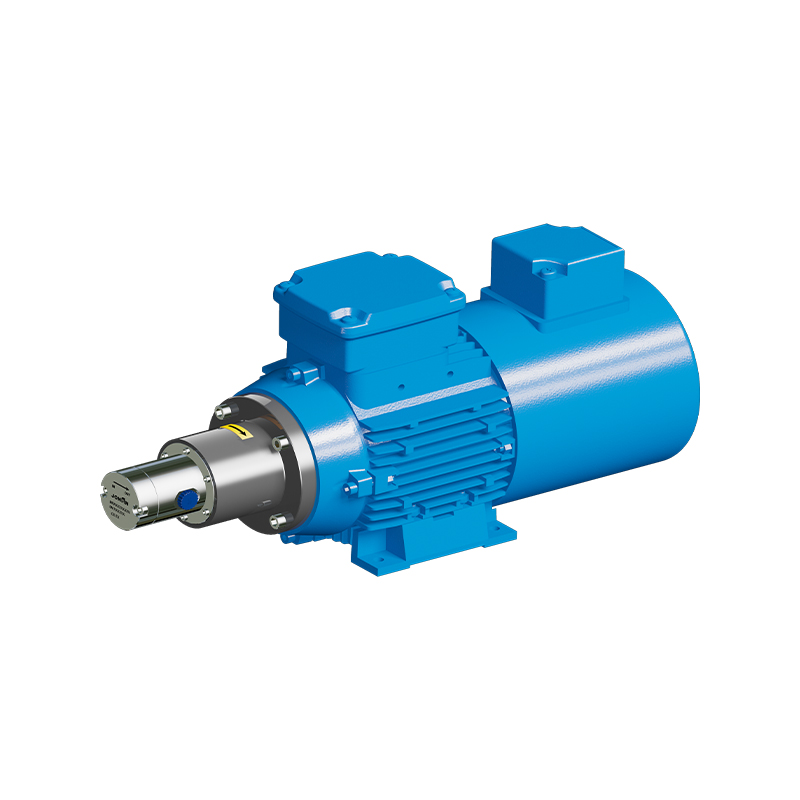
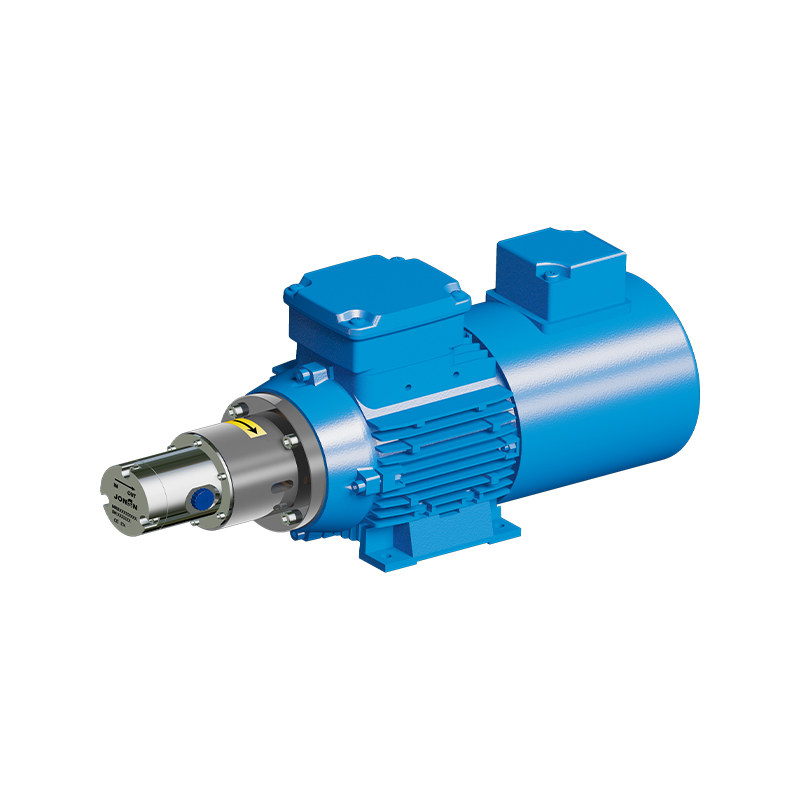
JONSN · MPG + MDC quantitative filling unit / MRA · MRB series
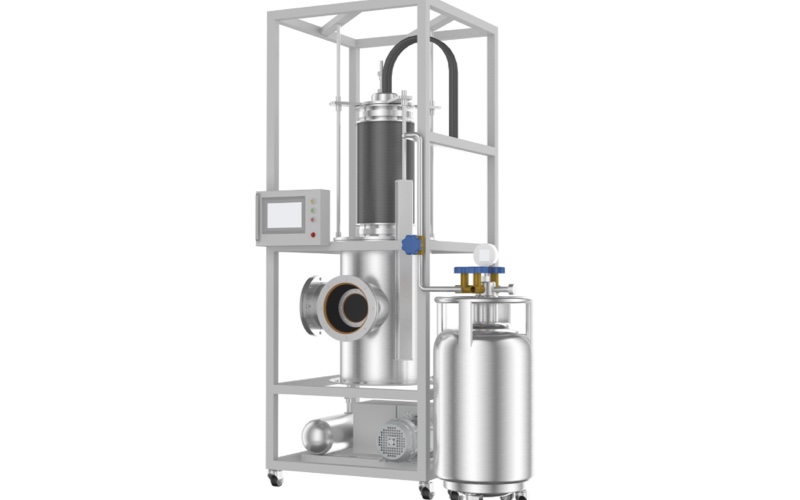
MPG + MDC · Quantitative filling unit
MRA / MRB · High-cleanliness & corrosive media
Output pulsation ≤ 1%
Low NPSH, stable suction with air
Magnetic coupling, no dynamic seal
Repeatability ±0.5%, PLC integration
矩形 6备份 19.jpg
Content Summary

Before cold plates, manifolds and pipework leave the factory, they have to go through filling and degassing, leak tightness testing, ageing cycling and coolant filling in turn. The real difficulty of this stage is not whether the liquid can be pumped in, but whether the same amount is injected every time and whether no air is brought into the system. Residual bubbles cause an uneven flow distribution in the passages and local hot spots, and they also make the pressure-decay leak test curve give a false verdict; pressure pulsation and dripping directly affect the takt and the consistency of the factory data. The deviation in the filling stage is often amplified further downstream in the thermal testing and the reliability data.

I. Four Kinds of Duty, Four Variables That Must Be Controlled

Cold plate / pipework filling and degassing
The cold plate passages are fine and dense with many blind spots, and air tends to accumulate at the high points, elbows and quick couplings of the pipework. The pump is required to start and stop smoothly at low speed, to fill in several steps and to circulate the air out; and on the suction side with air in it, it must not draw a vacuum and must not break a large air bubble into micro bubbles that are hard to remove — that is, a lower NPSHr and a stable gas-liquid two-phase conveying capability.
Leak testing and tightness test bench
The pressure holding and pressure decay verdicts are highly sensitive to the pressure curve. The filling and pressure-boost steps must not show obvious pulsation or pressure overshoot, otherwise a false verdict is easy; at the same time the medium has to be clean and the pump body free of external leakage, so that the sealing faces and the bench surface are not contaminated.
Ageing test cycling
In several hundred hours of continuous running, the pump is the component on the circulation circuit that wears most easily. Long life, low wear and small long-term flow drift are required, and long continuous running as well as several channels in parallel have to be supported.
Coolant quantitative dispensing
Dispensing a set volume into the line-side containers, the spare parts and the after-sales refill packs requires a high repeatability, good batch consistency, no dripping and convenient changeover cleaning.
The four stations also share one requirement: line integration. The filling unit has to accept the start-stop and speed commands of the PLC, and switch to the quantitative sampling mode by volume or by time, so that every filling amount is settable and traceable.

II. The Fitting Logic of the Precision Magnetic Gear Pump

Metering
Metering is the native duty of a positive-displacement pump
The output of a positive-displacement gear pump is basically linear with the speed, so a given speed and a given running time is a given volume — metering is its native duty, not something that has to be compensated again and again by an external flow meter. Together with the MDC quantitative filling control unit, which sets the filling amount by volume or by time, "how much to inject" can be issued directly as a process parameter; quantitative sampling and coolant dispensing need no repeated weighing and no manual correction, and the consistency between batches is easier to maintain.
Low pulsation
No shock on the cold plate welds and quick fittings
Low pulsation is equally important. The continuous gear meshing output has a small pressure fluctuation, so the filling does not shock the cold plate welds and the quick-connect seals, and the pressure decay curve of the pressure holding stage is not disturbed by the pump itself; compared with intermittent output, the readings of the test bench are cleaner, so false verdicts and retests are reduced. Magnetic coupling cancels the shaft seal, that dynamic sealing point, so the coolant does not seep along the shaft and does not carry wear particles from the sealing elements, which makes the data comparability in long cycling and with several units in parallel more reliable.
Suction
Filling, degassing and topping-up in the same circuit
In the early stage of filling the pipework contains air and the suction conditions are poor; the low NPSH lets the pump stay stably suctioning at a low inlet pressure and gradually expel the air instead of cavitating and running dry. As a result, "filling — degassing — topping up" can be completed in the same circuit, and the valve groups and the manual intervention are reduced accordingly. For low-viscosity media such as deionized water, glycol water solution and fluorinated liquid, the wetted parts can be selected by medium compatibility, balancing both cleanliness and service life.

IV. From Filling to the Test Bench — Line Implementation

Filling and degassing station
MPG + MDC injects in several steps by the set volume, with a low-speed start-stop combined with the high-point vent valve for circulation, until the return liquid shows no visible bubbles; then the same circuit switches to topping up, which removes one dismantling and reconnection.
Tightness / leak test bench
Low pulsation builds up the pressure, and the pump is stopped during the pressure holding stage, so the pressure decay curve reflects only the workpiece itself; the zero leakage of the magnetic coupling avoids the seepage of the medium affecting the bench surface and the verdict.
Ageing test cycling
The MPG acts as the circulation pump for long continuous running, with a small flow drift and no daily maintenance; when several test channels are operated in parallel the consistency is good, which makes a horizontal comparison easy.
Coolant quantitative dispensing
After the single volume is set on the MDC, dispensing is done with one touch, and the quantitative sampling mode supports batch records; where the medium is a fluorinated liquid or the cleanliness requirement is higher, the MRA / MRB series is used instead.

V. Selection Advice

Table 2
Selection by Duty Characteristics
Duty CharacteristicsRecommended Configuration
Conventional cold plate / pipework quantitative filling, pressure boost on the tightness bench, ageing cyclingJONSN-MPG + MDC quantitative filling unit
Quantitative sampling / dispensing, duties requiring degassing and a low NPSHJONSN-MRA / MRB series
Fluorinated, high-cleanliness or corrosive coolantsJONSN-MRA / MRB (PTFE lining + ceramic gears)
PLC interlocked with the takt, filling amount settable and traceableMDC control unit + line I/O integration

Please Contact Us!

ADDRESS

Building A3, Qiuyue Science and Technology Park, Ganzhou Economic and Technological Development Zone, Jiangxi Province

Tel.

0086-21-34720020

Follow Us

CopyRight © 2026 - Shanghai JONSN Fluid Equipment Co., Ltd.  All rights reserved  Sitemap All tags  Designed by Zhonghuan Internet
WHAT ARE YOU LOOKING FOR?
*
This field is required
Total quantity you need
*
This field is required
*
This field is required
Email format error
Due to email instability, you might miss our correspondence. Please provide your phone number for alternative contact.
This field is required
Telephone information is wrong!
Send Message
Get Custom Fluid Dosing Selection Solution
Starting a new project? Contact us for tailored pump solutions — from inlet specs and pipe sizing to motor matching and drawings — designed to fit your working conditions and accelerate your R&D cycle.
Company Name
*
This field is required
Email
*
This field is required
Email format error
Phone
This field is required
Telephone information is wrong!
WhatsApp
Message
*
This field is required
Send Message