






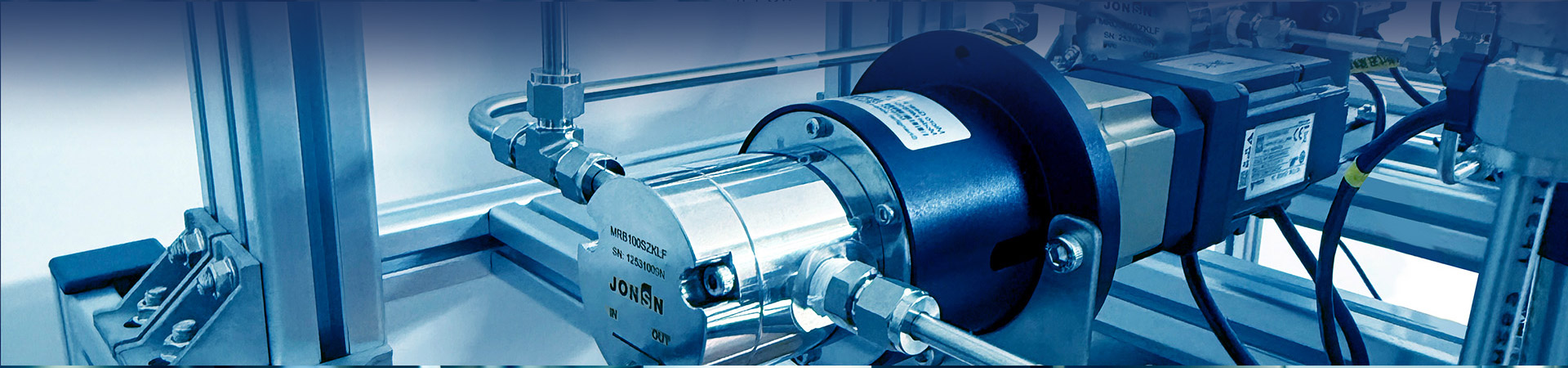
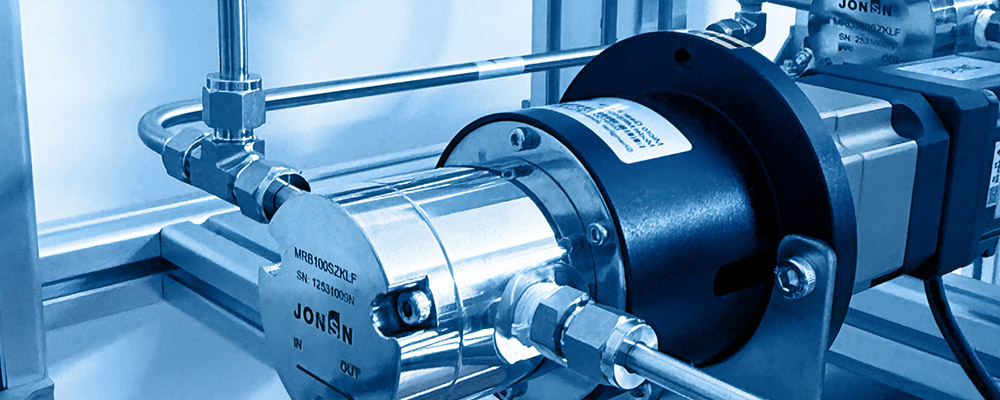
Best Micro Gear Pump Brands for Semiconductor Applications
Inside a semiconductor fab, a pump is a process component, not an accessory. A two percent flow deviation on developer delivery can shift a critical dimension by roughly a nanometre, and a single weeping seal on an HF line is a cleanroom incident. That is why equipment engineers treat the choice of a micro gear pump brand as a yield decision, and why the supplier list for wet process tools is short and audited.
This article sets out how to compare manufacturers of a micro dosing pump for semiconductor duty: what a high precision gear pump must deliver in a fab, where a high pressure micro gear pump becomes mandatory, how the requirements differ across wet process, chemical delivery and packaging electroplating, and how one manufacturer, JONSN, has organised its product line around these demands.
Key Takeaways
Wet process tools push flow control below ±0.5% and metal-ion leaching below one ppb, which eliminates most general-purpose pump designs; the component that survives is a high precision gear pump built from inert materials.
Filter loading, long delivery lines and spray nozzles make elevated pressure a hard requirement, not an option.
A high precision metering pump earns its rating through gear geometry and stable clearances, which is why manufacturing process depth matters more than catalogue figures.
Audit evidence from named semiconductor equipment makers is the fastest way to separate a qualified micro metering pump vendor from a promising one.
What a High Precision Gear Pump Must Deliver in a Fab
Wet process repeatability starts with the liquid. The pump that meters it has to behave like a component in the metrology chain, because whatever drifts in the flow path drifts on the wafer.
Displacement Geometry and Speed Linearity
Two meshing gears trap a fixed volume in each tooth gap and carry it from suction to discharge. Because that volume is geometric, output equals displacement multiplied by rotational speed, and a servo drive holds speed to a fraction of a percent. A well-machined high precision gear pump therefore tracks setpoint closely across the viscosity band of process chemicals, provided internal clearances stay stable. JONSN states a flow control accuracy of ±0.2% for its MPG series, achieved through precision-ground gear sets with mesh backlash held within about five micrometres. That is what turns a displacement pump into a high precision metering pump rather than a transfer pump with a servo on it.
Pulsation, Dead Volume and Yield
Reciprocating designs deliver fluid in bursts, and each burst becomes a ripple in spray uniformity or an unsteady meniscus in a dispense step. A rotary micro metering pump moves fluid continuously, which is why pulsation below about one percent appears in wet process acceptance criteria rather than as a preference. Dead volume matters just as much on photoresist and slurry duty: expensive chemistry left in a bulky flow path is wasted, and carryover between chemistries contaminates the next step. A high precision gear pump built with a compact flow path keeps both losses small.
| Parameter | Fab-relevant level | Why it matters |
|---|---|---|
| Flow accuracy | ±0.2% to ±0.5% of setpoint | Flow drift maps directly onto CD and film variation. |
| Pulsation | ≤1% at the discharge port | Protects spray, dispense and plating uniformity. |
| Displacement | 40 to 80 μl/r on micro frames | Millilitre-per-minute dosing without overspeed. |
| Residual volume | Sub-millilitre flow path | Less chemical waste and lower carryover risk. |
| Metal-ion leaching | Below one ppb target | Matches the cleanliness expectations of SEMI-aligned chemical specifications for liquid delivery. |
Where a High Pressure Micro Gear Pump Is Required in Semiconductor Tools
Flow gets specified first; pressure capability is discovered later, usually after a tool starts sagging mid-process. Three fab situations make elevated pressure a hard requirement.
Filter Loading and Long Delivery Lines
Chemicals travel through long lines and point-of-use polish filters. As a filter loads, differential pressure rises; a pump that cannot hold output against that rise lets flow sag before anyone changes the filter. A high pressure micro gear pump with a 10 bar working window and frames rated to 4 MPa system pressure keeps delivery flat through the filter life cycle, which is why high-pressure series such as JONSN MRC and MRE supply etchant and stripper loops rather than low-pressure transfer models.
Spray Nozzles and High-Pressure Stripper Supply
Batch spray tools and single-wafer chambers both push chemistry through fine nozzles at defined impingement pressures. Photoresist strippers run hot, often between 60 and 90 degrees Celsius, and need stable supply pressure to keep the process window. A high pressure micro gear pump in this role is judged less on brute force than on holding a set flow against varying back pressure without pulsation, since pressure ripple at the nozzle shows up as non-uniform removal.
| Series | Flow range | Pressure capability | Semiconductor duty |
|---|---|---|---|
| MPG | 1 to 280 ml/min | 5 to 10 bar differential, 4 MPa system | Trace additives, sampling, photoresist dispense |
| MRA / MRB | 100 to 4,800 ml/min | 0.5 to 25 bar differential, 4 MPa system | Chemical supply loops, bath replenishment |
| MRC | 0.8 to 14 L/min | 0.5 to 25 bar differential, 4 MPa system | High-pressure etchant and stripper supply |
| MRE | 4 to 48 L/min | 0.5 to 25 bar differential, 6 MPa system | Demanding closed loops with wide excursions |
Micro Dosing Pump Duties Across the Wet Process Line
Each wet process step loads the pump differently. Recognising the differences early prevents a single model being forced onto incompatible duties.
Cleaning, Developing and Etching
Cleaning and etch baths need steady recirculation and replenishment at moderate flow; developer delivery needs proportioning accuracy, because ±2% flow variation on developer is enough to shift a critical dimension by roughly a nanometre. A micro dosing pump on these duties combines metered accuracy with materials that tolerate the chemistry, from diluted HF to hot SPM.
CMP Slurry and Photoresist Dispensing
CMP slurries carry abrasive particles that grind ordinary clearances into wear debris, and their particle-size distribution must survive the pump intact; photoresist is shear-sensitive, costly, and must not cavitate on suction. Low-speed gear meshing and uniform tight clearances protect both media. This is where gear geometry tolerances of a few micrometres separate a micro dosing pump that holds calibration for months from one that drifts within weeks, because the same high precision gear pump hardware, dressed in inert materials, has to serve slurry and resist alike.
| Process step | Typical duty | Design focus |
|---|---|---|
| Wafer cleaning | Recirculation and replenishment | Corrosion-resistant wetted path, steady supply. |
| Developing | Proportioned delivery | High accuracy, low pulsation, no cavitation. |
| Etching | Constant supply against filter back pressure | Pressure margin, HC276 or PTFE wetted parts. |
| CMP slurry | Point-of-use micro dispensing | Low shear to protect abrasive size distribution. |
| Photoresist | Millilitre-level micro dispensing | Minimal dead volume, gentle suction behaviour. |
| Stripping | Hot high-pressure supply | Temperature tolerance, stable nozzle pressure. |
Micro Metering Pump Requirements for Electronic-Grade Chemical Delivery
Between storage and point of use, electronic-grade chemicals pass through a delivery loop with its own four thresholds: corrosion, purity, pressure stability and leakage, all of which a high precision metering pump must clear before it enters the tool.
Metal-Ion Control and Wetted Materials
Electronic-grade sulfuric acid, HF-based etchants and developers attack ordinary stainless steel, and every dissolved ion ends up on a wafer. A micro metering pump for this duty is judged on its wetted stack: PTFE or PEEK flow paths, ceramic or special-alloy gears, and Hastelloy C-276 heads where acids and chlorides combine. JONSN publishes a metal-ion leaching target below one ppb for its semiconductor configurations, an inert-materials approach that also means the pump introduces no contamination of its own into the chemical.
Sealless Architecture and Cleanroom Integration
Magnetic coupling transmits torque through a static containment shell, so there is no rotating shaft seal to wear or leak; the pump chamber is fully sealed by design. That removes the main leak path in strongly corrosive service and the particle source that dynamic seals represent. Integration closes the list: semiconductor cabinets leave little room, so a micro dosing pump platform with VCR-compatible fittings, compact footprints and low starting flow, such as JONSN's MPG series at a φ22 by 60 mm envelope, is far easier to qualify than a larger general-purpose design.
How to Evaluate Micro Gear Pump Brands
Brand comparisons in this niche are less about logos and more about verifiable capability. Four dimensions cover most of the risk when buying a micro gear pump for fab duty.
Manufacturing Precision Behind the Datasheet
Ask how gears and housings are produced and inspected. Multi-axis machining centres, ground gear surfaces and end-of-line calibration on every unit are what make a high precision metering pump hold its rating across a batch rather than on the demo unit only. Batch consistency figures, and whether the supplier states them at all, are worth asking for explicitly.
Customisation and Integration Support
OEM wet tools rarely leave room for a standard catalogue shape. Port orientation, VCR fittings, mounting flanges, motor types from brushless DC to servo, and communication protocols such as Modbus or CANopen decide whether integrating a micro metering pump into a tool takes weeks or quarters. A supplier who answers custom enquiries within 24 hours with dimensional drawings and CAD models is materially easier to build with.
Verification Evidence and After-Sales Depth
Coriolis-metered accuracy testing, published test videos, pump-code traceability that records factory gear clearances per serial number, and modular heads that swap on site are the after-sales features that keep a tool running through its qualification cycles. They also reveal whether a high pressure micro gear pump vendor expects a long engineering relationship or a one-time shipment.
| Evaluation dimension | Questions to ask | Red flags |
|---|---|---|
| Accuracy claim | Which instrument verified it, over what duration? | No test method stated anywhere |
| Materials | Standard wetted options for HF, SPM and solvents? | Single fixed material list |
| Audits | Named semiconductor customers or passed factory audits? | Claims with no verifiable evidence |
| Support | Spare parts, traceability, response time? | No documentation before payment |
Specifying a micro dosing pump for a wet process tool?
Send your chemistry, flow window, pressure point and interface requirements, and JONSN engineers will return a matched selection with material options and drawings within 24 hours.
Send an InquiryView Semiconductor SolutionsJONSN: A Micro Gear Pump Manufacturer Qualified in Semiconductor Production
JONSN (Shanghai JONSN Fluid Equipment Co., Ltd.) has spent more than sixteen years on precision gear pump engineering, operating under TÜV Rheinland ISO 9001:2015 certification in line with the ISO 9000 quality management family, and working to the chemical purity disciplines that SEMI standards define for liquid chemicals in microelectronics. Its MPG series has passed full-duty-cycle qualification at semiconductor equipment makers including AMEC and NAURA, with performance reported as exceeding leading imported brands in long-duration evaluation. For buyers comparing a micro gear pump vendor on the four dimensions above, three product lines show how the claims translate into hardware.
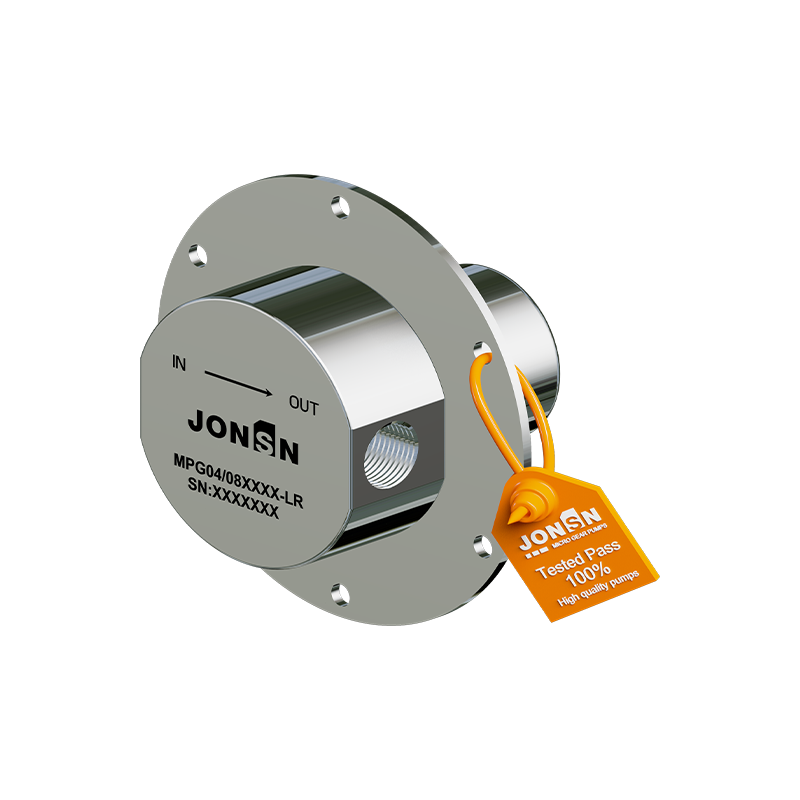
MPG Series
1 to 280 ml/min, 40 or 80 μl/r displacement, ±0.2% flow accuracy and a φ22 by 60 mm footprint for tool integration.
View MPG Series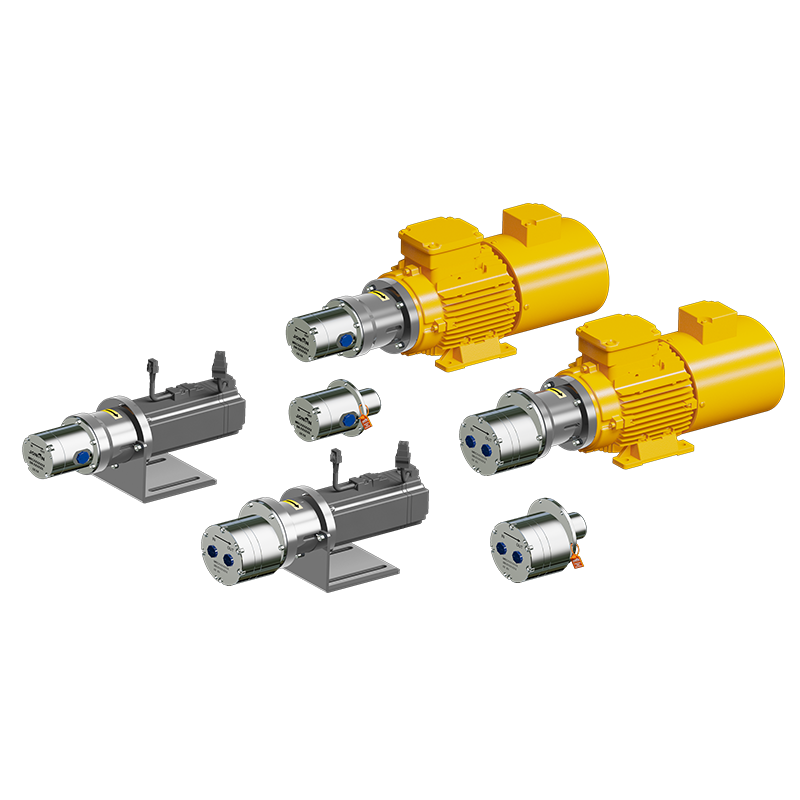
MRC / MRE Series
0.8 to 48 L/min with 4 to 6 MPa system pressure in SS316L or Hastelloy C-276, for high-pressure chemical supply loops.
View MRC Series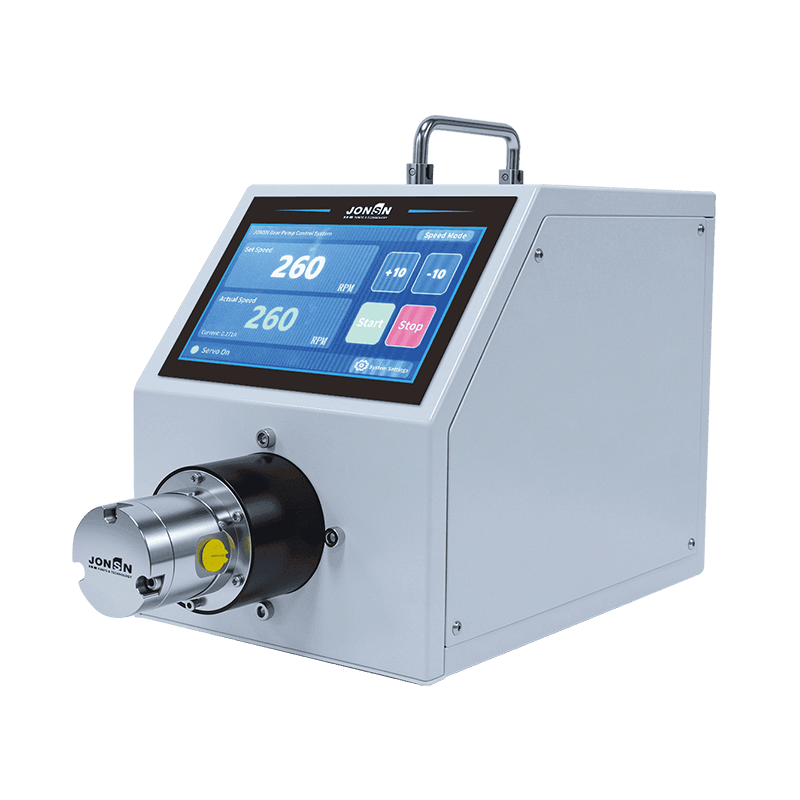
MDC Control Station
Servo-driven micro metering pump station from 1 ml/min to 10 L/min with three operating modes and RS485/Modbus integration.
View MDC StationA Selection Checklist for Semiconductor Pump Sourcing
Define the chemistry first, including concentration, temperature and cleanliness class, then set the flow and pressure window for the micro dosing pump.
Ask each vendor for the test method behind any accuracy or repeatability figure on a high precision metering pump datasheet.
Confirm wetted material options in writing, including lot-level certificates for the specific units.
Request one integration reference from a semiconductor equipment maker, with the audit result.
Agree spare parts strategy and pump-code traceability before the first shipment, not after the first failure.
Need a semiconductor dosing selection?
JONSN provides free selection support, CAD and STEP models, and pump-code traceability for every unit shipped.
Get a QuoteView All Pump Series →Conclusion
In semiconductor liquid handling, the high precision metering pump sits at the centre of yield, and the differences between suppliers show up in micrometre gear tolerances, verified accuracy figures, inert material stacks and audit-ready documentation rather than in brochures. A structured comparison on accuracy evidence, pressure capability, materials and service depth will separate vendors quickly, whether the duty calls for a high pressure micro gear pump or a low-pressure micro frame, and manufacturers such as JONSN that publish test methods, hold certification and carry qualification from leading semiconductor equipment makers make that comparison straightforward. Figures quoted here reflect manufacturer-published data and typical industry ranges; engineering teams should verify performance against their own process conditions before qualification.
FAQ
What flow range does a micro gear pump cover in semiconductor tools?
Precision micro gear platforms commonly span from about 1 ml/min on micro frames to tens of litres per minute on industrial frames. JONSN's series, for example, covers 1 ml/min to 67 L/min, so one qualified supplier can serve trace dispensing and loop circulation alike, and the same high precision gear pump platform underlies every frame in that range.
When is a high pressure micro gear pump necessary instead of a standard model?
Whenever back pressure can rise during operation: loading point-of-use filters, long delivery lines, spray nozzles or closed loops with pressure excursions. Frames rated to 4 MPa or 6 MPa system pressure hold output flat through these events.
How accurate is a high precision metering pump in practice?
Well-built gear metering designs hold roughly ±0.2% to ±0.5% of setpoint when viscosity and temperature are controlled. Always ask which instrument verified the figure and over what duration; a claim without a test method is a transfer pump wearing a metering label.
Why is magnetic coupling preferred for electronic-grade chemicals?
Magnetic coupling transmits torque through a static containment shell, so there is no rotating shaft seal to wear or leak. That removes both the particle generation and the main loss-of-containment path in ultra-pure, strongly corrosive chemistry.
What should a micro dosing pump supplier provide for a fab audit?
Quality system certification, wetted material certificates at lot level, per-serial factory test records and a traceable spare-parts pathway. Vendors operating under certified ISO 9001 systems, as audited by bodies such as TÜV Rheinland, are the fastest to qualify.
Can a micro metering pump be customised for an existing tool design?
Mature platforms support VCR fittings, port orientation changes, alternative motors and Modbus or CANopen communication as standard options. JONSN, for instance, answers custom enquiries with drawings within 24 hours and supports 360-degree outlet orientation across its MR and MPG series.